 833 kcal
 P 0g C 0.84g F 99.1g
Despite the name, glutinous rice flour contains zero gluten—it gets its stickiness from a unique starch composition.
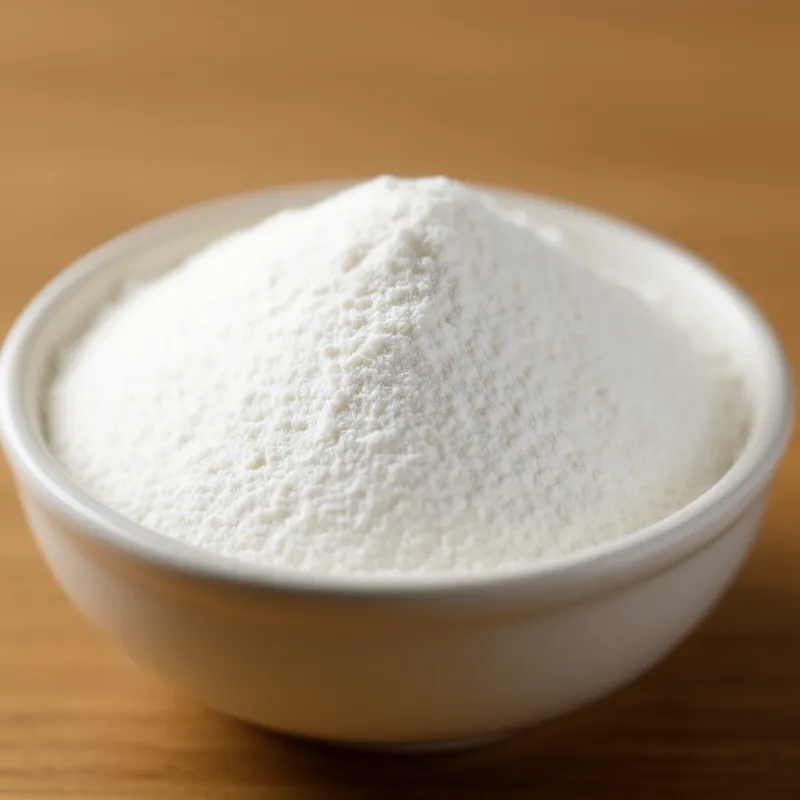
Glutinous rice flour, also known as sweet rice flour, is milled from short-grain or long-grain glutinous rice. Despite its misleading name, it contains absolutely no gluten. The "glutinous" label refers purely to its sticky, glue-like texture when cooked, which is driven by its starch composition. Regular rice contains a mix of amylose and amylopectin starches, but glutinous rice is almost entirely composed of amylopectin and virtually devoid of amylose. When heated with water, these highly branched amylopectin molecules gelatinize and create a uniquely chewy, elastic texture. This distinct chemistry makes it a foundational ingredient across East and Southeast Asia, used to craft mochi in Japan, tang yuan in China, and various chewy desserts in Thailand and the Philippines. Because it lacks gluten-forming proteins, it cannot be used to bake airy, yeasted breads on its own, but it excels at binding and providing structural chew to doughs and batters. Its ability to absorb water and harden slightly when cold also makes it a popular thickening agent for sauces and gravies that need to remain stable after freezing and thawing.
Because glutinous rice flour lacks gluten, it cannot be swapped 1:1 for wheat flour in baking. To use it effectively, blend it with water or milk and heat it to activate the starches' binding properties. It is ideal for making chewy dumplings, mochi, or thickening sauces that require freeze-thaw stability. Store it in an airtight container in a cool, dry pantry to prevent the raw starch from absorbing ambient moisture and clumping. For a nutritional boost, pair it with protein-rich ingredients to balance its high carbohydrate density.
Per 100g — daily values based on a 2,000 calorie diet
CalRay's AI recognizes flour and hundreds of thousands of other foods from a photo. No manual lookup needed.
Flour, rice, glutinous contains 358 calories per 100g. A standard serving of 1 RACC (30g) provides 107 calories. It is relatively calorie-dense, so portion control is important.
Flour, rice, glutinous provides 6.69g of protein per 100g, which is 13% of the 50g daily recommended value. It is not a primary protein source.
Flour, rice, glutinous contains 80.1g of carbohydrates per 100g .
Flour, rice, glutinous has 358 kcal per 100g, so portions need to be monitored on a weight-loss diet. Use CalRay to track your intake accurately.
The easiest way to track flour is with CalRay. Simply snap a photo of your meal and the AI will automatically identify the food and calculate calories and macros based on the estimated portion size — no manual lookup required. You can also search by name and adjust gram weight manually.
833 kcal  385 kcal
  107 kcal