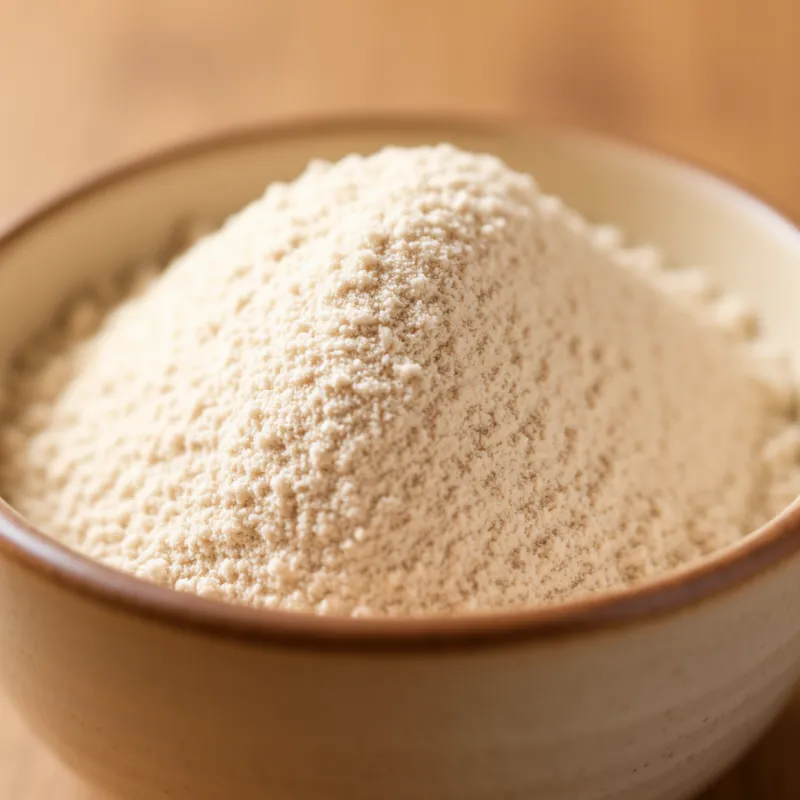
 621 kcal
 P 26.2g C 16.2g F 50.2g
A naturally gluten-free flour that builds structure through starch gelatinization rather than gluten networks.
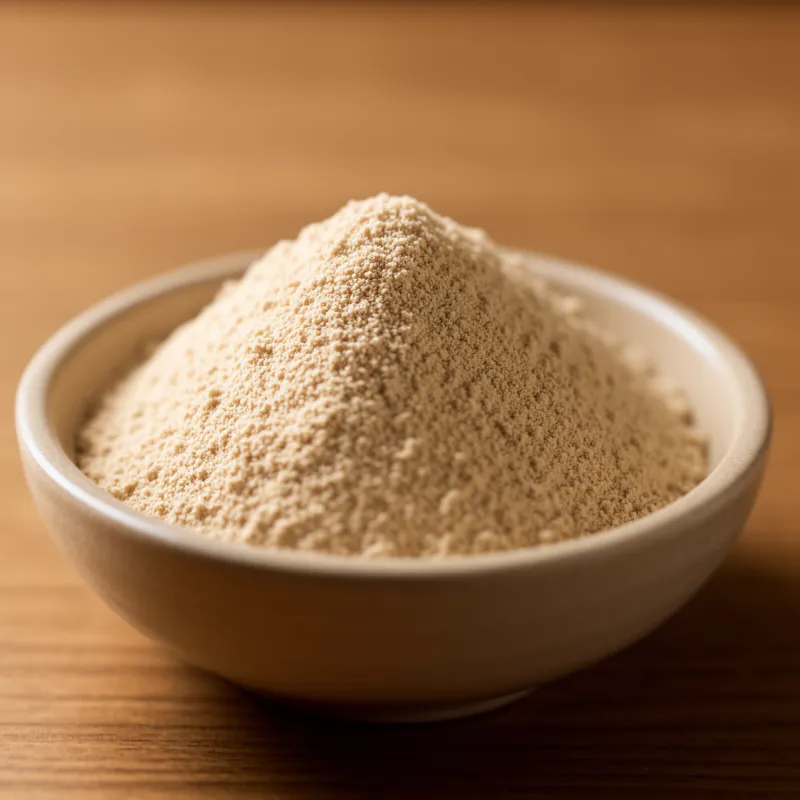
Brown rice flour is produced by milling the entire rice kernel, including the bran and germ, which sets it apart from white rice flour both nutritionally and chemically. Because it retains the lipid-rich bran and germ, brown rice flour is highly susceptible to lipid oxidation and rancidity, giving it a significantly shorter shelf life than its white counterpart. To preserve freshness, it is best stored in an airtight container in the refrigerator or freezer. From a baking chemistry perspective, brown rice flour contains no gluten-forming proteins. Instead of relying on an elastic gluten network to trap gases and provide structure, baked goods made with brown rice flour depend on the gelatinization of its starches. When heated in the presence of water, the starch granules swell and form a gel, which sets during cooling to provide the necessary crumb structure. This is why brown rice flour baked goods often require the addition of binders like xanthan gum, psyllium husk, or eggs to mimic the structural support that gluten naturally provides in wheat-based recipes. The bran also interrupts gel formation, often resulting in a denser, grittier texture.
Because brown rice flour lacks gluten and absorbs more moisture than wheat flour, it performs best when blended with other gluten-free flours and a starch like tapioca. To prevent a gritty texture in baked goods, let the batter or dough rest for 30 minutes before baking; this gives the bran particles time to hydrate. Always store brown rice flour in the refrigerator or freezer in an airtight container to prevent the natural oils in the bran from turning rancid.
Per 100g — daily values based on a 2,000 calorie diet
CalRay's AI recognizes flour and hundreds of thousands of other foods from a photo. No manual lookup needed.
Flour, rice, brown contains 365 calories per 100g. A standard serving of 1 RACC (30g) provides 110 calories. It is relatively calorie-dense, so portion control is important.
Flour, rice, brown provides 7.19g of protein per 100g, which is 14% of the 50g daily recommended value. It is not a primary protein source.
Flour, rice, brown contains 75.5g of carbohydrates per 100g .
Flour, rice, brown has 365 kcal per 100g, so portions need to be monitored on a weight-loss diet. Use CalRay to track your intake accurately.
The easiest way to track flour is with CalRay. Simply snap a photo of your meal and the AI will automatically identify the food and calculate calories and macros based on the estimated portion size — no manual lookup required. You can also search by name and adjust gram weight manually.
621 kcal  150 kcal
  833 kcal