 884 kcal
 P 0g C 0g F 100g
Botanically a berry that the U.S. Supreme Court legally declared a vegetable in 1893.
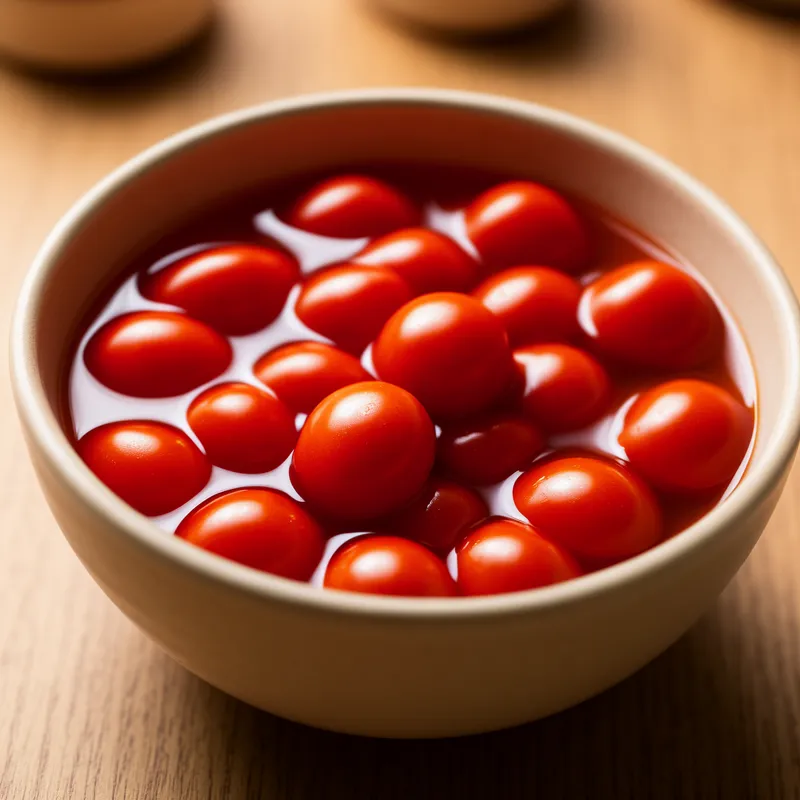
Botanically, a tomato is a berry, which makes it a fruit, but in 1893 the U.S. Supreme Court legally declared it a vegetable in the case of Nix v. Hedden. The court ruled that based on how people use it in cooking—served with dinner rather than dessert—it should be taxed as a vegetable. Beyond its confusing legal identity, tomatoes contain a powerful carotenoid called lycopene. Unlike many nutrients that degrade when heated, lycopene actually becomes more bioavailable when tomatoes are cooked. The thermal processing breaks down the plant's cell walls and transforms trans-lycopene into the cis-isomer, which the human body absorbs much more easily. Adding a small amount of fat, like olive oil, further increases this absorption because lycopene is fat-soluble. This means a raw tomato on a salad still offers excellent vitamin C, but a slow-simmered tomato sauce delivers a significantly higher dose of this antioxidant. The red pigment accumulates in the skin, so keeping tomatoes whole and unpeeled during cooking maximizes the final nutritional payload.
Store whole tomatoes at room temperature away from direct sunlight to preserve their flavor and texture, as refrigeration halts ripening and can make them mealy. If you plan to cook them into a sauce or roast them, leave the skins on to retain maximum lycopene. Tossing cooked tomatoes with a drizzle of extra virgin olive oil will significantly enhance your body's ability to absorb that fat-soluble antioxidant. For raw preparations, pair them with a pinch of salt to draw out their natural juices.
Per 100g — daily values based on a 2,000 calorie diet
CalRay's AI recognizes tomatoes and hundreds of thousands of other foods from a photo. No manual lookup needed.
Tomatoes, whole contains 23 calories per 100g. A standard serving of 1 RACC (130g) provides 30 calories. It is considered a very low-calorie food (under 50 kcal/100g), making it excellent for weight management.
Tomatoes, whole provides 0.87g of protein per 100g, which is 2% of the 50g daily recommended value. It is not a primary protein source.
Tomatoes, whole contains 4.29g of carbohydrates per 100g . It also provides 0.87g of dietary fiber.
Yes! Tomatoes, whole is very low in calories (23 kcal/100g) and can be eaten in generous portions even on a calorie-restricted diet.
The easiest way to track tomatoes is with CalRay. Simply snap a photo of your meal and the AI will automatically identify the food and calculate calories and macros based on the estimated portion size — no manual lookup required. You can also search by name and adjust gram weight manually.
884 kcal  298 kcal
  143 kcal