 884 kcal
 P 0g C 0g F 100g
Sea scallops have dozens of tiny blue eyes that detect light and dark to help them escape predators by swimming.
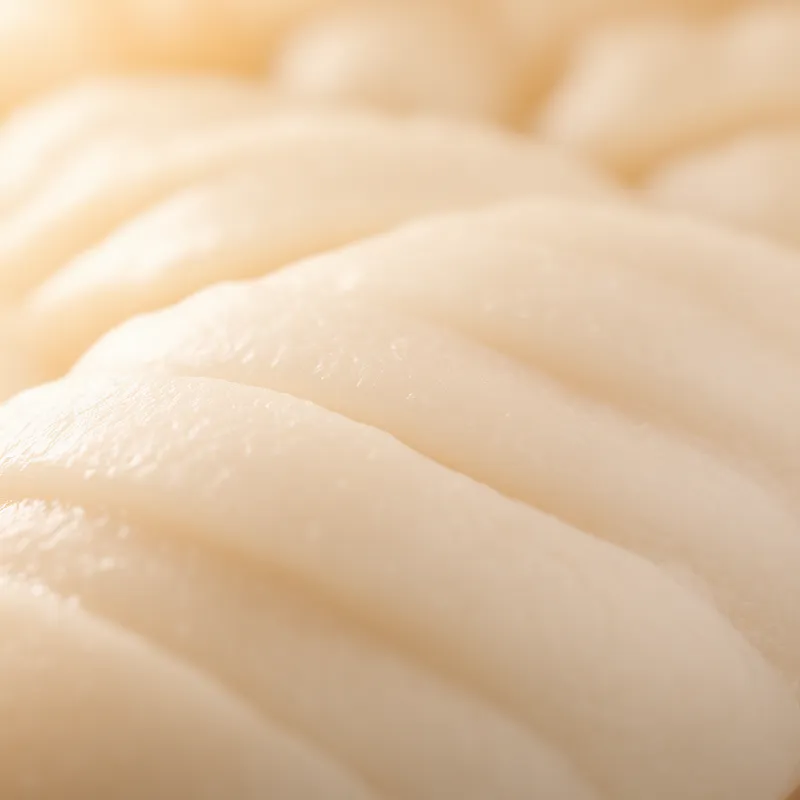
Sea scallops (Placopecten magellanicus) possess a unique anatomical feature that sets them apart from most other bivalves: a row of dozens of brilliantly colored, bright blue eyes lining the edge of their mantles. Unlike the simple light-sensitive spots found in many clams, scallop eyes are remarkably complex, featuring a cornea, a lens, and a concave mirror made of guanine crystals that focuses light onto a double-layered retina. This sophisticated visual system allows them to detect the movement of approaching predators, such as starfish. When threatened, a sea scallop can rapidly open and close its shell, expelling water to propel itself backward through the ocean in a jerky swimming motion. This combination of advanced optics and jet propulsion makes the scallop one of the most active and visually aware bivalves in the marine environment. The large, edible adductor muscle we consume is the very same muscle responsible for this rapid swimming action, which explains its firm texture and high protein density compared to more sedentary shellfish.
Because sea scallops are extremely lean with only 0.49g of fat per 100g, they can dry out quickly if overcooked. Sear them rapidly over high heat for just one to two minutes per side to develop a golden crust while keeping the center tender. Pairing them with a source of healthy fats, like extra virgin olive oil or avocado, not only prevents sticking in the pan but also helps absorb their fat-soluble vitamins, like vitamin A and D. Store fresh scallops in the coldest part of your refrigerator and cook them within a day of purchase for the best texture.
Per 100g — daily values based on a 2,000 calorie diet
CalRay's AI recognizes scallops and hundreds of thousands of other foods from a photo. No manual lookup needed.
Scallops, sea contains 66 calories per 100g. It is a moderate-calorie food that can fit into most healthy diets.
Scallops, sea provides 13.5g of protein per 100g, which is 27% of the 50g daily recommended value. It is a good source of protein.
Scallops, sea contains 1.97g of carbohydrates per 100g .
Scallops, sea has 66 kcal per 100g, which is relatively moderate. It can fit into a weight-loss diet as long as portion sizes are managed.
The easiest way to track scallops is with CalRay. Simply snap a photo of your meal and the AI will automatically identify the food and calculate calories and macros based on the estimated portion size — no manual lookup required. You can also search by name and adjust gram weight manually.
884 kcal  223 kcal
  143 kcal