 298 kcal
 P 18.9g C 2.96g F 23.4g
A fresh poblano and a dried ancho are the exact same pepper, transformed by dehydration into two completely different ingredients.
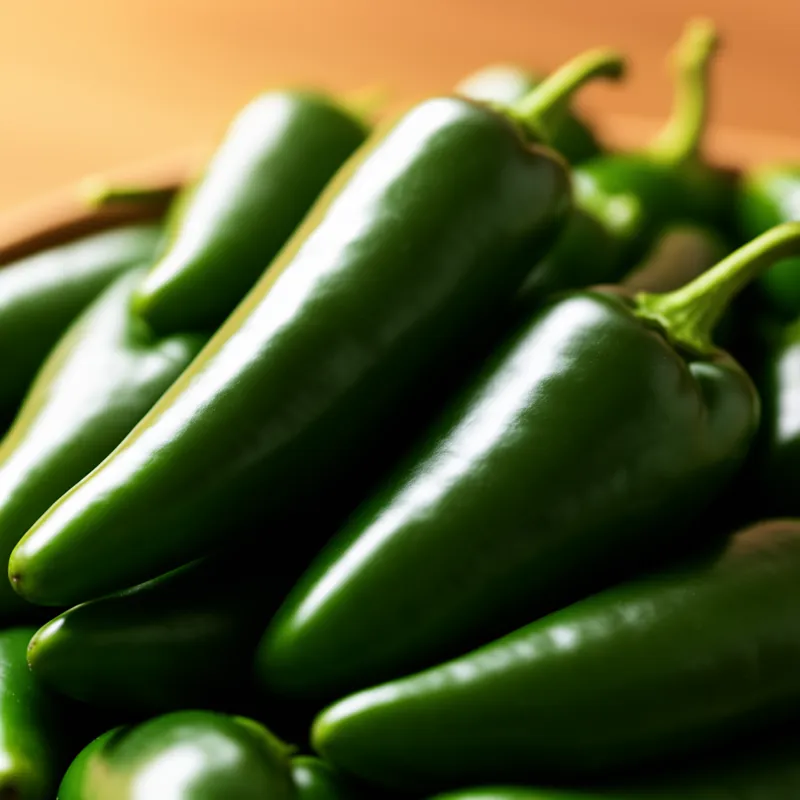
The poblano takes its name from Puebla, Mexico, where it was traditionally cultivated. What many cooks don't realize is that this single pepper lives a double life: fresh and dark green, it is a poblano, but once dried it becomes an ancho — meaning "wide" in Spanish — and its flavor profile shifts entirely. Drying concentrates the pepper's natural sugars and introduces raisin-like, smoky, and chocolatey notes that are largely absent in the fresh version. This is not a different cultivar; it is the same fruit at a different water content. On the Scoville scale, poblanos register roughly 1,000 to 1,500 units, making them milder than jalapeños. The bulk of that heat resides not in the seeds themselves but in the placental tissue — the pale, spongy pith that anchors the seeds to the pepper's inner wall. Seeds absorb capsaicin through contact with this tissue, so removing both seeds and pith, as this entry specifies, strips away nearly all perceptible heat while preserving the poblano's signature earthy, slightly bitter flavor.
Roast poblanos directly over a flame or under a broiler until the skin blackens and blisters, then steam them in a sealed bag for 15 minutes before peeling — this caramelizes the sugars and deepens the flavor far beyond raw use. They are ideal for stuffing (chiles rellenos), slicing into rajas for tacos, or blending into mole sauces. Pair them with dairy-based fillings like queso fresco, which balances their residual heat, or with slow-cooked beans and onions to build a layered, earthy base for soups and stews.
Per 100g — daily values based on a 2,000 calorie diet
CalRay's AI recognizes peppers and hundreds of thousands of other foods from a photo. No manual lookup needed.
Peppers, poblano, seeded contains 28 calories per 100g. It is considered a very low-calorie food (under 50 kcal/100g), making it excellent for weight management.
Peppers, poblano, seeded provides 1.43g of protein per 100g, which is 3% of the 50g daily recommended value. It is not a primary protein source.
Peppers, poblano, seeded contains 5.14g of carbohydrates per 100g . It also provides 2.07g of dietary fiber.
Yes! Peppers, poblano, seeded is very low in calories (28 kcal/100g) and can be eaten in generous portions even on a calorie-restricted diet.
The easiest way to track peppers is with CalRay. Simply snap a photo of your meal and the AI will automatically identify the food and calculate calories and macros based on the estimated portion size — no manual lookup required. You can also search by name and adjust gram weight manually.
298 kcal  38 kcal
  106 kcal