 61 kcal
 P 10.3g C 3.64g F 0.37g
A nectarine is simply a peach with a recessive genetic mutation that disables fuzz production.
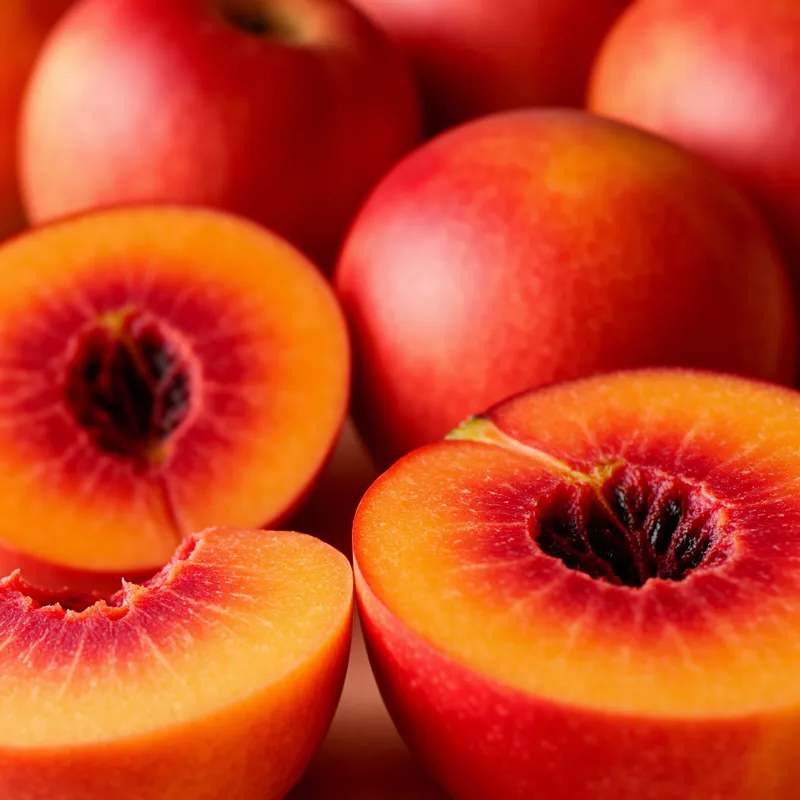
Nectarines and peaches are genetically nearly identical, sharing the same species, Prunus persica. The only difference is a single recessive gene that controls the production of fuzz on the fruit's skin. A nectarine is not a cross between a peach and a plum, as is commonly believed, but rather a naturally occurring peach variant. Interestingly, peach trees can occasionally produce nectarines, and nectarine trees can sometimes produce peaches, due to spontaneous bud mutations. This genetic closeness means they share a very similar nutritional profile, offering notable amounts of vitamin C, vitamin A, and dietary fiber. The smooth skin of a nectarine contains concentrations of anthocyanins—the pigments responsible for the red hues—which act as antioxidants in the human body. Because they lack the protective fuzz of a peach, nectarines are more susceptible to bruising and rot, which historically made them more difficult to cultivate and transport. Today, careful handling and refrigerated transport allow them to be widely enjoyed worldwide.
Nectarines are best enjoyed at room temperature when fully ripe, as cold temperatures can mute their flavor. To ripen, leave them stem-side down on a counter for a day or two. Once ripe, store them in the refrigerator for up to three days to prevent over-softening. The skin is completely edible and holds a significant portion of the fruit's fiber and antioxidants, so wash thoroughly and eat whole. Grilling nectarine halves caramelizes their natural sugars, making an excellent pairing for savory proteins like pork or a topping for Greek yogurt.
Per 100g — daily values based on a 2,000 calorie diet
CalRay's AI recognizes nectarines and hundreds of thousands of other foods from a photo. No manual lookup needed.
Nectarines contains 39 calories per 100g. A standard serving of 1 each (129g) provides 50 calories. It is considered a very low-calorie food (under 50 kcal/100g), making it excellent for weight management.
Nectarines provides 1.06g of protein per 100g, which is 2% of the 50g daily recommended value. It is not a primary protein source.
Nectarines contains 9.18g of carbohydrates per 100g . It also provides 1.5g of dietary fiber.
Yes! Nectarines is very low in calories (39 kcal/100g) and can be eaten in generous portions even on a calorie-restricted diet.
The easiest way to track nectarines is with CalRay. Simply snap a photo of your meal and the AI will automatically identify the food and calculate calories and macros based on the estimated portion size — no manual lookup required. You can also search by name and adjust gram weight manually.
61 kcal  122 kcal
  84 kcal