 45 kcal
 P 1.41g C 8.05g F 1.48g
Parmesan isn't just a topping—it's a crystallized umami bomb engineered by months of enzymatic breakdown.
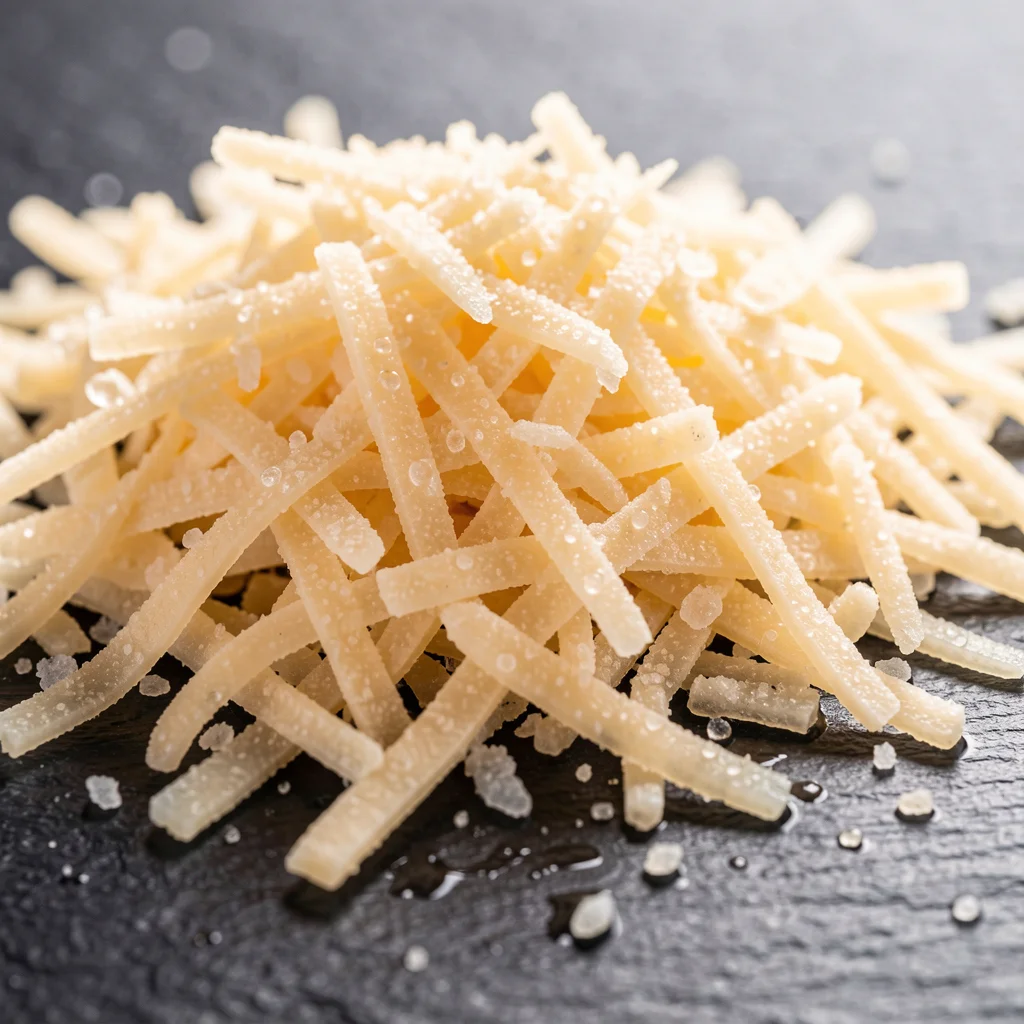
Parmigiano-Reggiano is produced under strict Italian DOP regulations using raw cow's milk, natural whey starters, and calf rennet. The wheels are aged for a minimum of 12 months, during which proteolysis—the breakdown of proteins into free amino acids—creates its signature savory depth. Tyrosine, an amino acid abundant in Parmesan, crystallizes into the crunchy white specks that characterize well-aged wheels. Because the moisture content drops significantly during aging, grated Parmesan is highly concentrated in both flavor and nutrients, packing over 30 grams of protein per 100 grams. The high glutamate content—often exceeding 1,000 mg per 100 grams—is what makes it a natural flavor enhancer, amplifying savory notes in dishes without needing added salt. Additionally, the long fermentation process consumes nearly all the lactose, making aged Parmesan naturally very low in carbohydrates and generally well-tolerated by those with lactose sensitivity. True Parmigiano-Reggiano can only be produced in a specific region of Italy, and every wheel is inspected by a master grader before being branded.
Grated Parmesan melts best when folded into hot dishes off the heat, preventing the proteins from seizing into clumps. To maximize its umami impact without over-salting a dish, add a small handful of grated Parmesan to pasta water or broths as they simmer. Store it tightly sealed in the refrigerator to prevent the fats from absorbing odors, and let it come to room temperature before serving over salads to fully release its nutty aromatics.
Per 100g — daily values based on a 2,000 calorie diet
CalRay's AI recognizes cheese and hundreds of thousands of other foods from a photo. No manual lookup needed.
Cheese, parmesan, grated contains 403 calories per 100g. A standard serving of 1 RACC (5g) provides 20 calories. It is relatively calorie-dense, so portion control is important.
Cheese, parmesan, grated provides 30.1g of protein per 100g, which is 60% of the 50g daily recommended value. It is an excellent source of protein.
Cheese, parmesan, grated contains 4.33g of carbohydrates per 100g .
Cheese, parmesan, grated has 403 kcal per 100g, so portions need to be monitored on a weight-loss diet. Use CalRay to track your intake accurately. Its high protein content (30.1g/100g) helps with satiety.
The easiest way to track cheese is with CalRay. Simply snap a photo of your meal and the AI will automatically identify the food and calculate calories and macros based on the estimated portion size — no manual lookup required. You can also search by name and adjust gram weight manually.
45 kcal  17 kcal
  143 kcal