 245 kcal
 P 17.5g C 0g F 19.4g
Concentrating tomatoes into paste makes their lycopene significantly easier for your body to absorb than when raw.
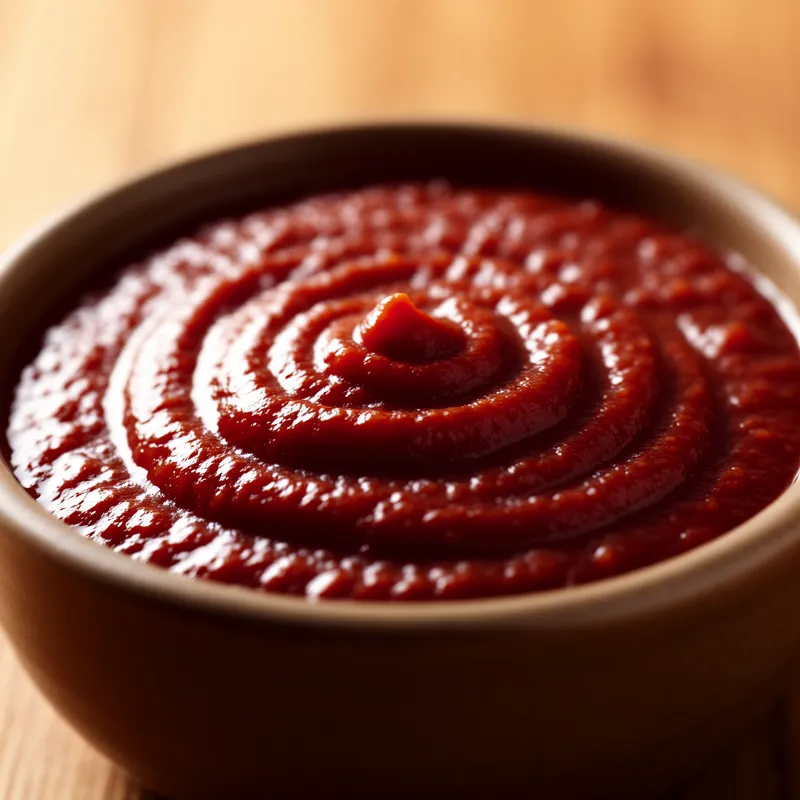
Tomato paste is essentially fresh tomatoes stripped of their water content, resulting in a dense concentrate that packs intense umami and nutritional value. The most notable chemical transformation occurs with lycopene, the carotenoid responsible for the fruit's red color. In raw tomatoes, lycopene exists primarily in a trans-isomer form, which is tightly bound to the plant's cell structure and poorly absorbed by the human digestive tract. The prolonged heating process used to make tomato paste breaks down cell walls and induces an isomerization process, converting much of the trans-lycopene into the cis-isomer form. This structural change makes the antioxidant substantially more bioavailable. Additionally, because tomato paste is concentrated, a single tablespoon can deliver as much lycopene as several whole raw tomatoes. The Maillard reaction also plays a role during the initial cooking stages, creating complex flavor compounds that give the paste its deeply savory, slightly caramelized profile. This makes it not just a thickening agent, but a foundational flavor base for cuisines worldwide.
To maximize both flavor and nutritional absorption, always fry tomato paste in a little oil before adding liquids to your dish. Sautéing it for a minute or two caramelizes the natural sugars and cooks out the raw, metallic edge, while the presence of fat helps your body absorb the fat-soluble lycopene. If you open a can but don't use it all, store the leftover paste in an airtight container in the fridge for up to a week, or freeze it in tablespoon-sized portions for future use.
Per 100g — daily values based on a 2,000 calorie diet
CalRay's AI recognizes tomato and hundreds of thousands of other foods from a photo. No manual lookup needed.
Tomato, paste contains 104 calories per 100g. A standard serving of 1 RACC (30g) provides 31 calories. It is a moderate-calorie food that can fit into most healthy diets.
Tomato, paste provides 4.23g of protein per 100g, which is 8% of the 50g daily recommended value. It is not a primary protein source.
Tomato, paste contains 20.2g of carbohydrates per 100g . It also provides 4.7g of dietary fiber.
Tomato, paste has 104 kcal per 100g, which is relatively moderate. It can fit into a weight-loss diet as long as portion sizes are managed. Its fiber content (4.7g/100g) also promotes fullness.
The easiest way to track tomato is with CalRay. Simply snap a photo of your meal and the AI will automatically identify the food and calculate calories and macros based on the estimated portion size — no manual lookup required. You can also search by name and adjust gram weight manually.
245 kcal  38 kcal
  884 kcal