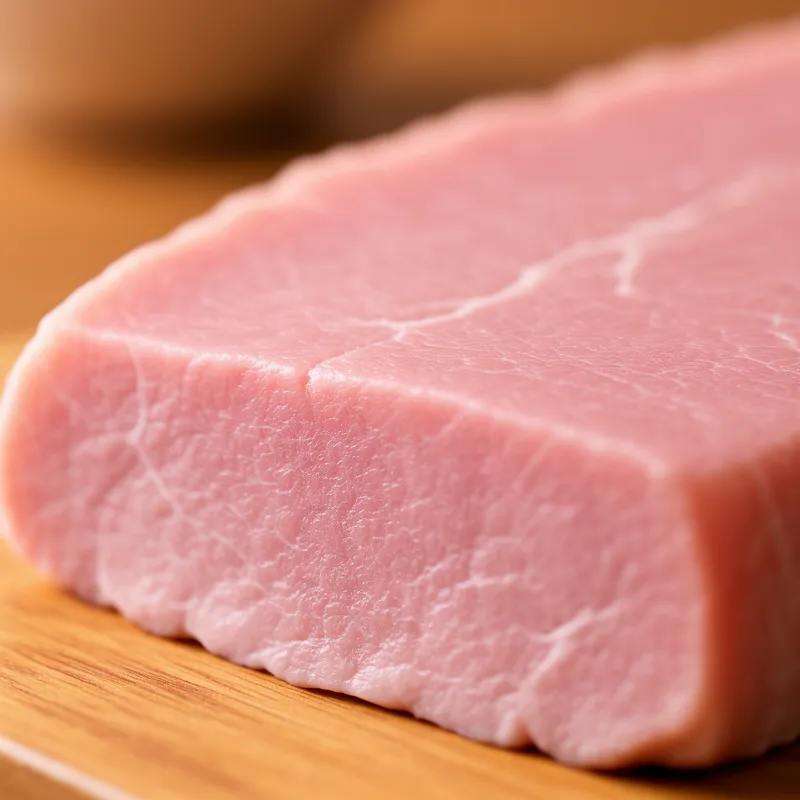
 170 kcal
 P 21.1g C 0g F 9.47g
Peaches are technically drupes, and their fuzzy skin evolved as a defense mechanism to deter pests and retain moisture.
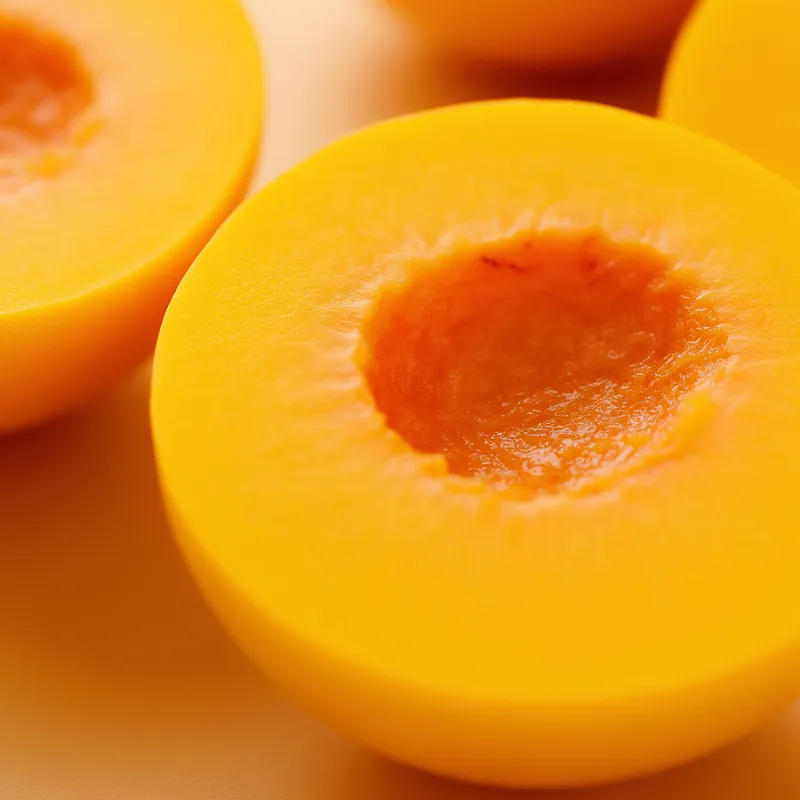
Peaches belong to the Prunus genus, making them close relatives of almonds, cherries, and plums. What most people don't realize is that the peach's characteristic fuzz is actually a botanical adaptation known as trichomes. These microscopic, hair-like structures evolved to protect the fruit from pests, regulate temperature, and reduce water loss. Furthermore, the yellow and orange hues of this variety come from beta-carotene, a provitamin A carotenoid. The peach pit itself contains amygdalin, a cyanogenic glycoside that can release cyanide when metabolized, though the flesh is entirely safe. Peaches were first domesticated in China around 6000 BCE, where they were revered as symbols of immortality and longevity. Spanish explorers brought them to the Americas in the 16th century, but it took centuries for the fruit to adapt to the New World's climates. Additionally, peaches are climacteric fruits, meaning they continue to ripen after being picked due to a surge in ethylene gas production. This is why a hard peach left on the counter will soften over a few days, breaking down starches into sugars. Today, the fuzzy skin is often peeled for culinary use, but leaving it on retains the highest concentration of antioxidants and dietary fiber.
To maximize nutritional intake, consume yellow peaches with the skin intact, as it contains the highest concentration of insoluble fiber and antioxidants. If a peach is underripe, place it in a loosely closed paper bag at room temperature to trap ethylene gas and accelerate softening. Once ripe, refrigerate to halt further breakdown. Yellow peaches pair exceptionally well with savory proteins; grilling them caramelizes their natural sugars and pairs well with lean pork or chicken.
Per 100g — daily values based on a 2,000 calorie diet
CalRay's AI recognizes peaches and hundreds of thousands of other foods from a photo. No manual lookup needed.
Peaches, yellow contains 42 calories per 100g. A standard serving of 1 fruit (147g) provides 62 calories. It is considered a very low-calorie food (under 50 kcal/100g), making it excellent for weight management.
Peaches, yellow provides 0.91g of protein per 100g, which is 2% of the 50g daily recommended value. It is not a primary protein source.
Peaches, yellow contains 10.1g of carbohydrates per 100g . It also provides 1.5g of dietary fiber.
Yes! Peaches, yellow is very low in calories (42 kcal/100g) and can be eaten in generous portions even on a calorie-restricted diet.
The easiest way to track peaches is with CalRay. Simply snap a photo of your meal and the AI will automatically identify the food and calculate calories and macros based on the estimated portion size — no manual lookup required. You can also search by name and adjust gram weight manually.
170 kcal  61 kcal
  626 kcal