 35 kcal
 P 2.92g C 4.42g F 1.49g
Hazelnuts owe their signature aroma to a single molecule also found in dried hay.
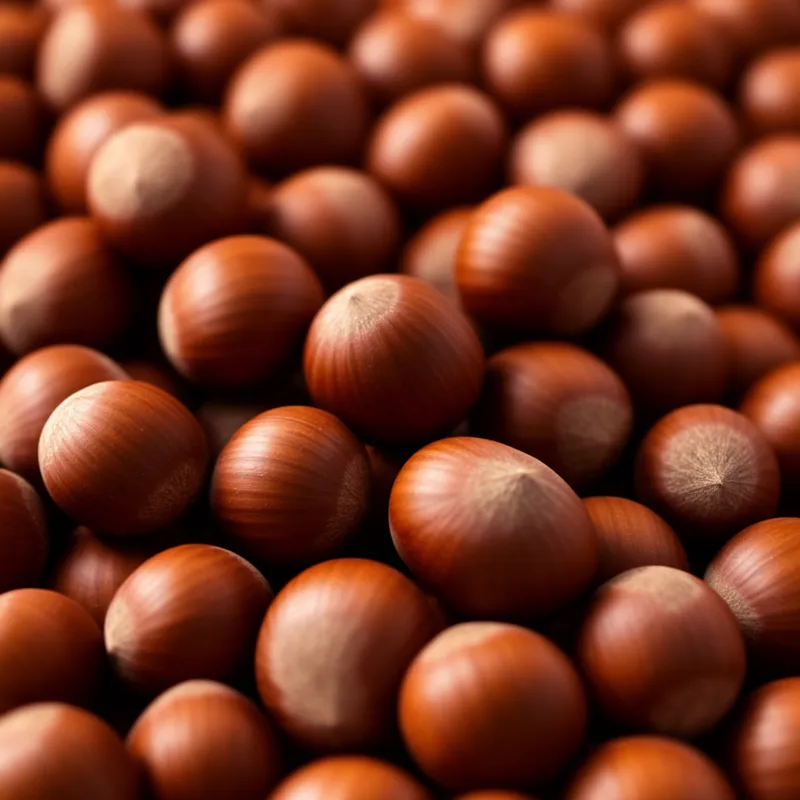
Hazelnuts possess a unique chemical signature driven by a compound called filbertone, a pyrazine derivative that gives the nut its distinct, earthy aroma. Interestingly, this same molecule is found in the scent of dried hay and cooked apples, linking the aroma of autumn fields to roasted nuts. Historically, hazelnuts—also called filberts, a name possibly derived from the Old English "full beard" referring to the husk covering the nut, or from St. Philibert's feast day in late August when the nuts ripen—were among the first foods cultivated in Europe. Evidence of large-scale hazelnut processing dates back to Mesolithic Scotland. In the wild, hazel trees form a symbiotic relationship with mycorrhizal fungi in the soil. This biological mechanism allows the tree's roots to absorb water and phosphorus in exchange for plant sugars, enabling the trees to thrive in poor soils. This robust root system contributes to the rich lipid profile of the nut, which is heavily dominated by oleic acid, the same monounsaturated fat that makes olive oil so heart-healthy.
To maximize the absorption of their fat-soluble vitamins, pair roasted hazelnuts with foods rich in vitamins A or K. Remove their naturally bitter skin by roasting them at 175°C (350°F) for 10 minutes and rubbing them in a towel, which also intensifies the filbertone aroma. Store them in an airtight container in the refrigerator for up to a year, as their high oleic acid content makes them less prone to rancidity than polyunsaturated-rich nuts, though they still benefit from cool, dark storage.
Per 100g — daily values based on a 2,000 calorie diet
CalRay's AI recognizes nuts and hundreds of thousands of other foods from a photo. No manual lookup needed.
Nuts, hazelnuts or filberts contains 642 calories per 100g. A standard serving of 1 RACC (30g) provides 193 calories. It is relatively calorie-dense, so portion control is important.
Nuts, hazelnuts or filberts provides 13.5g of protein per 100g, which is 27% of the 50g daily recommended value. It is a good source of protein.
Nuts, hazelnuts or filberts contains 26.5g of carbohydrates per 100g . It also provides 8.41g of dietary fiber.
Nuts, hazelnuts or filberts has 642 kcal per 100g, so portions need to be monitored on a weight-loss diet. Use CalRay to track your intake accurately. Its fiber content (8.41g/100g) also promotes fullness.
The easiest way to track nuts is with CalRay. Simply snap a photo of your meal and the AI will automatically identify the food and calculate calories and macros based on the estimated portion size — no manual lookup required. You can also search by name and adjust gram weight manually.
35 kcal  382 kcal
  273 kcal