 85 kcal
 P 0.73g C 20.1g F 0.22g
Unlike white flour, whole wheat contains wheat germ oils that can go rancid at room temperature.
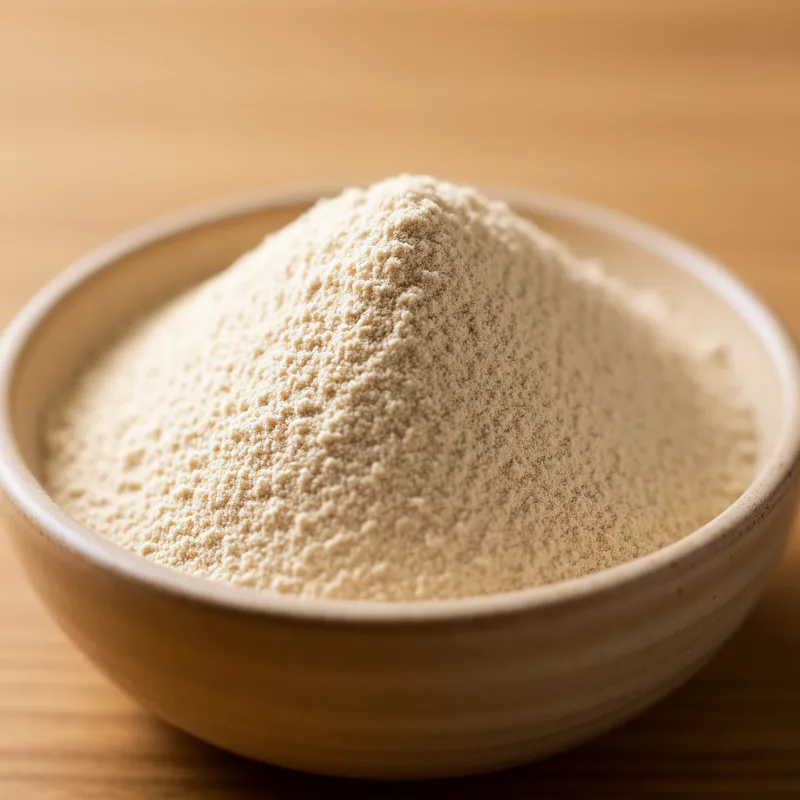
Whole wheat flour is made by grinding the entire wheat kernel—the bran, germ, and endosperm. What is less known is the chemical and physical reason why whole wheat flour behaves so differently in baking. The bran acts like tiny razor blades, cutting through gluten strands as dough is kneaded. This physical disruption is why 100% whole wheat bread tends to be denser and shorter in volume than white bread. Furthermore, the wheat germ contains a high concentration of polyunsaturated fatty acids, particularly linoleic acid. Because these oils are prone to oxidation, whole wheat flour has a significantly shorter shelf life than refined white flour. While white flour can sit in a pantry for years, whole wheat flour is best stored in the refrigerator or freezer to prevent the oils from turning rancid and developing bitter, paint-like off-flavors. The presence of phytic acid in the bran also binds to minerals like iron and zinc, reducing their bioavailability, which is why long-fermentation sourdough methods are often used to neutralize phytic acid and improve the nutritional absorption of whole grain breads.
Because the bran cuts gluten strands, avoid over-kneading doughs made with 100% whole wheat flour to prevent a tough, dense texture. Letting the flour hydrate (autolyse) for 20 to 30 minutes before kneading softens the bran. To maximize mineral absorption and reduce phytic acid, use a long-fermentation sourdough method. Always store unenriched whole wheat flour in an airtight container in the freezer to protect its natural wheat germ oils from oxidation.
Per 100g — daily values based on a 2,000 calorie diet
CalRay's AI recognizes flour and hundreds of thousands of other foods from a photo. No manual lookup needed.
Flour, whole wheat, unenriched contains 370 calories per 100g. A standard serving of 1 RACC (30g) provides 111 calories. It is relatively calorie-dense, so portion control is important.
Flour, whole wheat, unenriched provides 15.1g of protein per 100g, which is 30% of the 50g daily recommended value. It is a good source of protein.
Flour, whole wheat, unenriched contains 71.2g of carbohydrates per 100g . It also provides 10.6g of dietary fiber.
Flour, whole wheat, unenriched has 370 kcal per 100g, so portions need to be monitored on a weight-loss diet. Use CalRay to track your intake accurately. Its high protein content (15.1g/100g) helps with satiety. Its fiber content (10.6g/100g) also promotes fullness.
The easiest way to track flour is with CalRay. Simply snap a photo of your meal and the AI will automatically identify the food and calculate calories and macros based on the estimated portion size — no manual lookup required. You can also search by name and adjust gram weight manually.
85 kcal  78 kcal
  148 kcal