 734 kcal
 F 81.5g
This flour gets its baking strength from natural oxygen exposure rather than chemical bleaching agents.
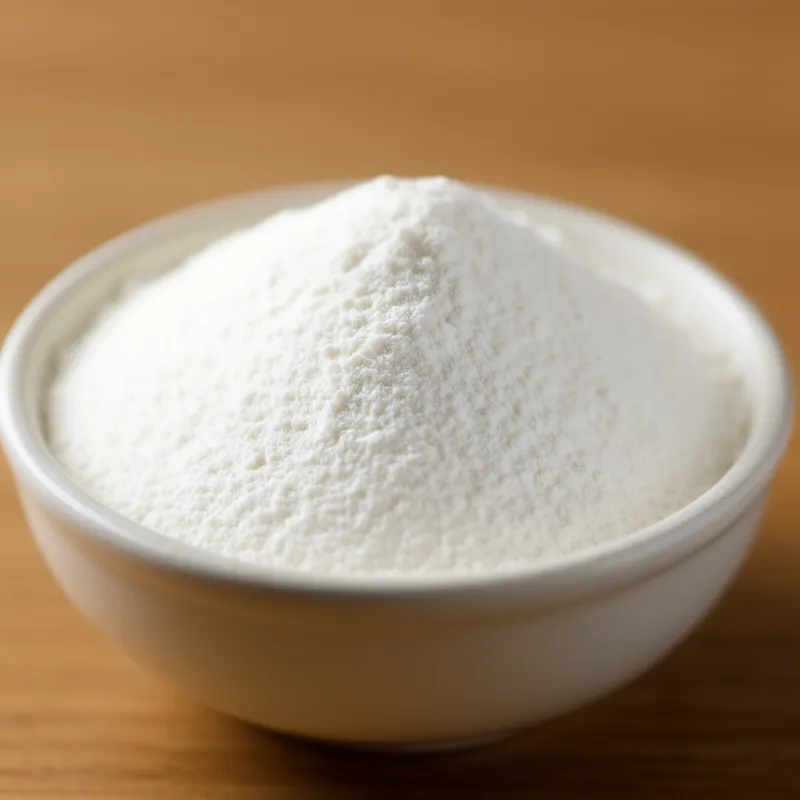
All-purpose flour is a blend of hard and soft wheat. When freshly milled, it is pale yellow due to carotenoid pigments like xanthophylls. Bleached flour uses chemicals such as benzoyl peroxide to instantly whiten it and alter the gluten. Unbleached flour, however, simply sits in storage for several weeks, allowing natural oxidation to whiten the pigments and strengthen the gluten-forming proteins. This natural aging process, known as curing, allows oxygen to cross-link glutenin proteins, increasing their molecular weight. This results in a dough that can trap carbon dioxide more effectively during fermentation. Without the addition of chemical bleaching agents, the flour retains a slightly creamy color and a milder, less astringent flavor profile. Because this specific entry is unenriched, it also reflects the base nutritional state of refined wheat before government-mandated fortification, offering a blank canvas for bakers who want to control their own micronutrient additions or who live in regions without mandatory flour fortification laws.
Because unbleached flour naturally develops stronger gluten, it excels in yeast breads, pizza doughs, and laminated pastries where structure is critical. Store it in an airtight container in a cool, dark place to prevent the natural oils in the remaining endosperm from going rancid. Since it is unenriched, pair it with nutrient-dense ingredients like eggs or dairy to compensate for the lack of added B vitamins and iron in your final baked goods.
Per 100g — daily values based on a 2,000 calorie diet
CalRay's AI recognizes flour and hundreds of thousands of other foods from a photo. No manual lookup needed.
Flour, wheat, all-purpose, unenriched, unbleached contains 362 calories per 100g. A standard serving of 1 RACC (30g) provides 109 calories. It is relatively calorie-dense, so portion control is important.
Flour, wheat, all-purpose, unenriched, unbleached provides 12g of protein per 100g, which is 24% of the 50g daily recommended value. It is a good source of protein.
Flour, wheat, all-purpose, unenriched, unbleached contains 74.6g of carbohydrates per 100g . It also provides 3g of dietary fiber.
Flour, wheat, all-purpose, unenriched, unbleached has 362 kcal per 100g, so portions need to be monitored on a weight-loss diet. Use CalRay to track your intake accurately. Its fiber content (3g/100g) also promotes fullness.
The easiest way to track flour is with CalRay. Simply snap a photo of your meal and the AI will automatically identify the food and calculate calories and macros based on the estimated portion size — no manual lookup required. You can also search by name and adjust gram weight manually.
734 kcal  148 kcal
  60 kcal