 61 kcal
 P 10.3g C 3.64g F 0.37g
Botanically inverted flowers, figs concentrate their floral sweetness into a chewy, seed-studded matrix when dried.
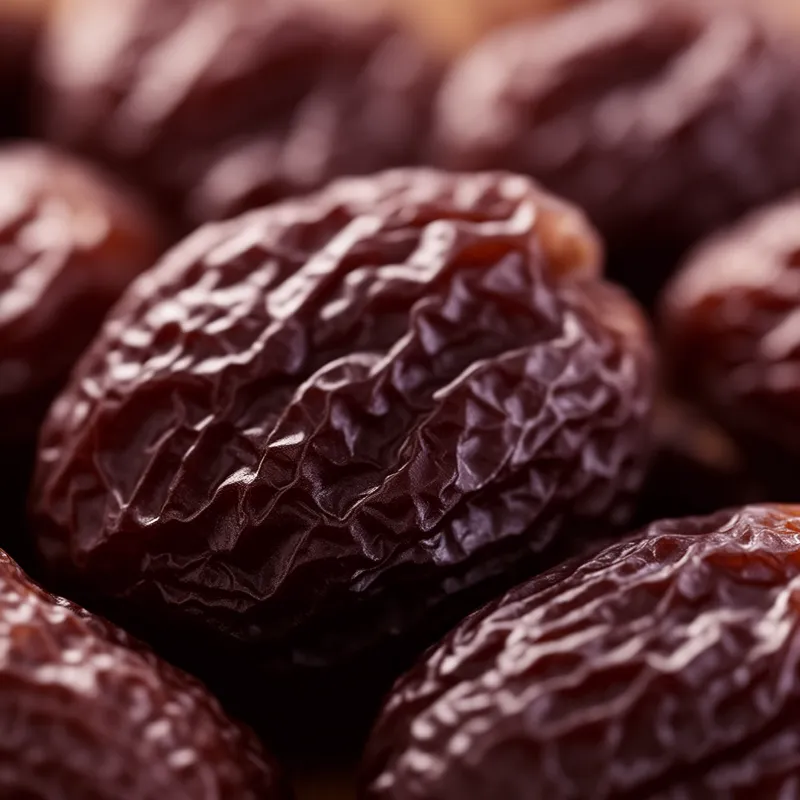
Figs are not technically fruits; they are inverted flowers called syconia. The fleshy interior is a cluster of hundreds of tiny flowers and seeds. This unique botanical structure requires a specialized pollination process. Most commercial varieties grown today, like the common Black Mission or Brown Turkey, are parthenocarpic, meaning they develop without pollination. However, traditional varieties like Smyrna figs rely on a tiny wasp, Blastophaga psenes, to complete their life cycle. The female wasp crawls inside the fig through a small opening called the ostiole, losing her wings in the process, and pollinates the inner flowers before dying. Enzymes within the fig then digest the wasp, converting her body into protein that nourishes the growing fruit. When figs are dried, their natural sugars concentrate, yielding a dense, energy-rich food that has sustained civilizations across the Mediterranean and Middle East for millennia. The drying process also preserves their high fiber and mineral content, particularly calcium and potassium, making them a shelf-stable nutritional powerhouse.
Dried figs are incredibly versatile in both sweet and savory applications. To rehydrate them for baking or compotes, soak them in warm water or tea for 20 minutes. For a savory contrast, halve them and stuff with a dollop of Greek yogurt or a slice of prosciutto, allowing the tangy or salty components to balance the fig's intense sweetness. Store dried figs in an airtight container in a cool, dark place to prevent them from drying out further or crystallizing their sugars.
Per 100g — daily values based on a 2,000 calorie diet
CalRay's AI recognizes figs and hundreds of thousands of other foods from a photo. No manual lookup needed.
Figs contains 249 calories per 100g. A standard serving of 1 each (8.4g) provides 21 calories. It is relatively calorie-dense, so portion control is important.
Figs provides 3.3g of protein per 100g, which is 7% of the 50g daily recommended value. It is not a primary protein source.
Figs contains 63.9g of carbohydrates per 100g . It also provides 9.8g of dietary fiber.
Figs has 249 kcal per 100g, so portions need to be monitored on a weight-loss diet. Use CalRay to track your intake accurately. Its fiber content (9.8g/100g) also promotes fullness.
The easiest way to track figs is with CalRay. Simply snap a photo of your meal and the AI will automatically identify the food and calculate calories and macros based on the estimated portion size — no manual lookup required. You can also search by name and adjust gram weight manually.
61 kcal  729 kcal
  273 kcal