 884 kcal
 P 0g C 0g F 100g
Botanically a berry, legally a vegetable, and more nutritious cooked than raw.
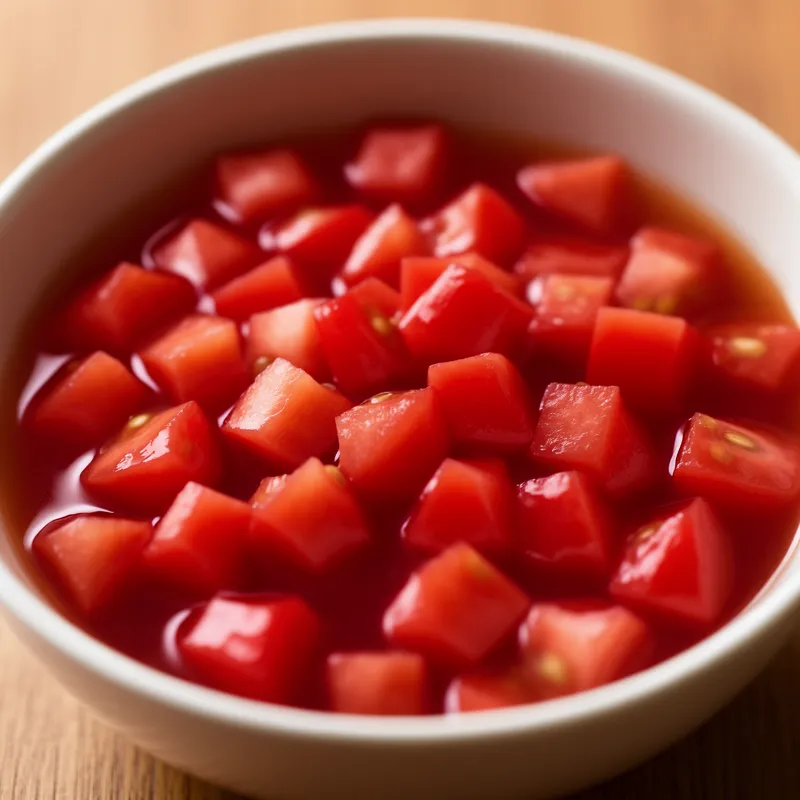
In 1893, the U.S. Supreme Court ruled in Nix v. Hedden that the tomato is legally a vegetable for tariff purposes, despite being botanically a berry. The justices reasoned that people use tomatoes in dinners, not desserts, so common culinary usage trumped botanical science. But the tomato's most surprising property is chemical, not legal. Tomatoes are the richest dietary source of lycopene, a carotenoid pigment linked to cardiovascular health. Counterintuitively, processing tomatoes—cooking them, pureeing them, or canning them—increases lycopene bioavailability rather than destroying it. Heat breaks down the plant cell walls that trap lycopene in chromoplasts, and the thermal isomerization of all-trans lycopene into cis-isomers makes the molecule easier for the human gut to absorb. Adding fat amplifies this further: lycopene is lipophilic, so cooking tomatoes in oil can raise absorption several-fold compared to eating them raw and dry. This is why a tomato sauce simmered in olive oil delivers more usable lycopene than a fresh tomato sliced over a salad. The tomato plant itself belongs to the nightshade family (Solanaceae), making it a close relative of potatoes, eggplants, and bell peppers.
Store ripe tomatoes at room temperature, stem-side down, away from direct sunlight—refrigeration degrades flavor compounds and gives them a mealy texture. To maximize lycopene intake, cook tomatoes with a source of fat such as olive oil; a simple simmered sauce or roasted tomato dish will deliver far more bioavailable lycopene than raw slices. If using raw, pair them with olive oil, avocado, or cheese to aid absorption. Overripe tomatoes are ideal for sauces and soups where texture doesn't matter.
Per 100g — daily values based on a 2,000 calorie diet
CalRay's AI recognizes tomatoes and hundreds of thousands of other foods from a photo. No manual lookup needed.
Tomatoes contains 18 calories per 100g. A standard serving of 1 cup (245g) provides 44 calories. It is considered a very low-calorie food (under 50 kcal/100g), making it excellent for weight management.
Tomatoes provides 0.84g of protein per 100g, which is 2% of the 50g daily recommended value. It is not a primary protein source.
Tomatoes contains 3.32g of carbohydrates per 100g .
Yes! Tomatoes is very low in calories (18 kcal/100g) and can be eaten in generous portions even on a calorie-restricted diet.
The easiest way to track tomatoes is with CalRay. Simply snap a photo of your meal and the AI will automatically identify the food and calculate calories and macros based on the estimated portion size — no manual lookup required. You can also search by name and adjust gram weight manually.
884 kcal  298 kcal
  143 kcal