 38 kcal
 P 0.83g C 8.61g F 0.05g
Not a green tomato at all — tomatillos are a sticky, husk-wrapped nightshade cousin domesticated in Mexico long before European contact.
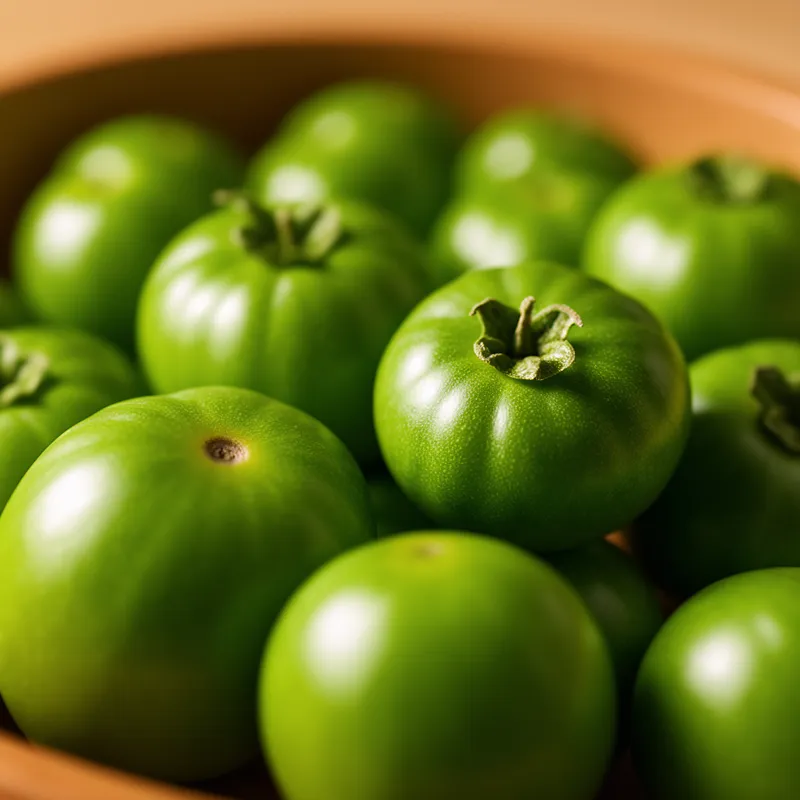
Despite the Spanish name meaning 'little tomato,' tomatillos (Physalis philadelphica) are not tomatoes but members of a different genus within the nightshade family, more closely related to groundcherries and cape gooseberries. Archaeological evidence from the Tehuacán Valley places their domestication in Mexico well over two thousand years ago, making them one of the oldest cultivated plants in the Americas. When you remove the papery husk, you'll notice a sticky, waxy residue coating the skin — this is not mold or pesticide residue but a natural secretion rich in withanolides, bitter-tasting compounds that deter insects and herbivores. Rinsing under warm water removes most of this film. Unlike tomatoes, tomatillos remain firm even when fully ripe and are almost always used cooked rather than raw, because roasting or simmering breaks down their pectin-rich cell walls and transforms their tart, citrusy acidity into the deep, savory backbone of salsa verde. Their green color comes from chlorophyll that persists even at maturity, unlike tomatoes which lose chlorophyll as they ripen.
Always remove the husk and rinse the sticky residue under warm water before use. Roast halved tomatillos under a broiler or on a dry comal until charred and softened — this caramelizes their natural sugars and mellows their sharp acidity, creating the classic base for salsa verde. Blend with garlic, jalapeños, and onion for a sauce that pairs naturally with chicken or pork. Avoid aluminum cookware, as the fruit's acidity can react and impart a metallic taste. Store dehusked tomatillos refrigerated in a paper bag for up to two weeks.
Per 100g — daily values based on a 2,000 calorie diet
CalRay's AI recognizes tomatillos and hundreds of thousands of other foods from a photo. No manual lookup needed.
Tomatillos, dehusked contains 4 calories per 100g. A standard serving of 1 RACC (85g) provides 3 calories. It is considered a very low-calorie food (under 50 kcal/100g), making it excellent for weight management.
Tomatillos, dehusked provides 1.06g of protein per 100g, which is 2% of the 50g daily recommended value. It is not a primary protein source.
Tomatillos, dehusked contains 0g of carbohydrates per 100g . It also provides 1.7g of dietary fiber.
Yes! Tomatillos, dehusked is very low in calories (4 kcal/100g) and can be eaten in generous portions even on a calorie-restricted diet.
The easiest way to track tomatillos is with CalRay. Simply snap a photo of your meal and the AI will automatically identify the food and calculate calories and macros based on the estimated portion size — no manual lookup required. You can also search by name and adjust gram weight manually.
38 kcal  143 kcal
  24 kcal