 884 kcal
 P 0g C 0g F 100g
Romaine owes its name to the Romans who popularized it on the Greek island of Kos, yet it packs far more vitamin K than its watery reputation suggests.
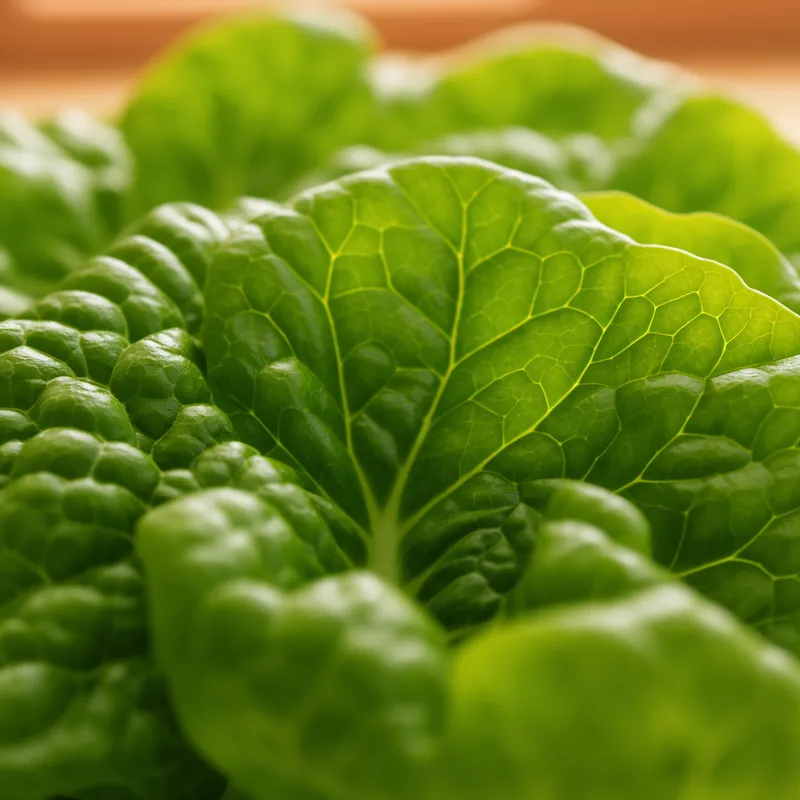
Romaine lettuce (Lactuca sativa var. longifolia) is also known as Cos lettuce, named after the Greek island of Kos where it was heavily cultivated before spreading to Rome. The Romans introduced it across their empire, which is why it eventually became known as 'romaine' (French for Roman). Beyond its history, romaine possesses a distinct chemical profile. The milky white fluid found in its stems and ribs contains lactucarium, a complex mixture of compounds including lactucin and lactucopicrin. This sap gives the plant its botanical genus name Lactuca, derived from the Latin word for milk. Historically, lactucarium was recognized for its mild sedative and analgesic properties, leading to the traditional folk remedy of eating lettuce to combat insomnia. While modern commercial romaine contains only trace amounts of these compounds, laboratory studies confirm that lactucin and lactucopicrin still interact with the central nervous system to promote mild relaxation. Furthermore, the deep green outer leaves are packed with chlorophyll and beta-carotene, pigments essential for photosynthesis that also provide significant dietary vitamin A. The satisfying crunch of the central rib comes from specialized, water-filled turgor cells that maintain structural pressure, keeping the leaves rigid until dehydration causes them to wilt.
To maximize nutritional intake, use the darker outer leaves rather than discarding them, as they contain the highest concentrations of beta-carotene and folate. Store unwashed romaine in a loosely sealed plastic bag with a dry paper towel to absorb excess moisture, keeping it crisp for up to a week. For optimal nutrient absorption of its fat-soluble vitamins (A and K), pair raw romaine with an olive oil-based vinaigrette. Avoid cooking the delicate leaves; instead, use the sturdy ribs raw in salads or lightly grill the halved heads for a smoky charred flavor.
Per 100g — daily values based on a 2,000 calorie diet
CalRay's AI recognizes lettuce and hundreds of thousands of other foods from a photo. No manual lookup needed.
Lettuce, romaine, green contains 21 calories per 100g. A standard serving of 1 RACC (85g) provides 18 calories. It is considered a very low-calorie food (under 50 kcal/100g), making it excellent for weight management.
Lettuce, romaine, green provides 0.98g of protein per 100g, which is 2% of the 50g daily recommended value. It is not a primary protein source.
Lettuce, romaine, green contains 4.06g of carbohydrates per 100g .
Yes! Lettuce, romaine, green is very low in calories (21 kcal/100g) and can be eaten in generous portions even on a calorie-restricted diet.
The easiest way to track lettuce is with CalRay. Simply snap a photo of your meal and the AI will automatically identify the food and calculate calories and macros based on the estimated portion size — no manual lookup required. You can also search by name and adjust gram weight manually.
884 kcal  27 kcal
  421 kcal