 884 kcal
 P 0g C 0g F 100g
A non-heading wild cabbage descendant that turns its own starches into antifreeze to survive the winter.
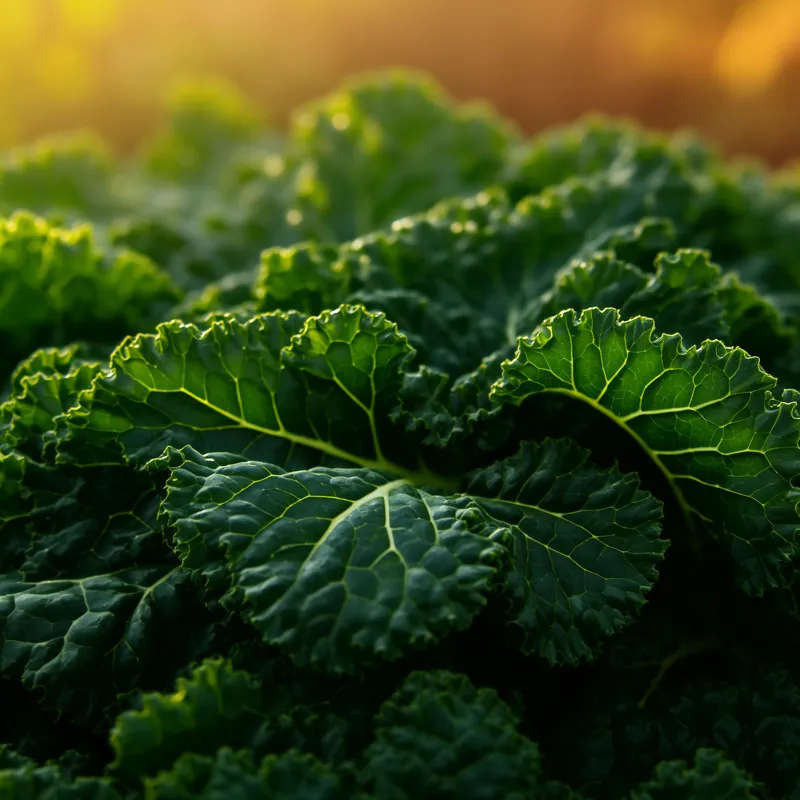
Kale was one of the most common green vegetables in Europe until the end of the Middle Ages, when headed cabbage became more popular. Botanically, kale, broccoli, cauliflower, Brussels sprouts, collard greens, and kohlrabi are all the exact same species: Brassica oleracea. They are merely different cultivars selected over centuries for different favored traits—leaves for kale and collards, buds for cabbage, flowers for broccoli and cauliflower, and stems for kohlrabi. Kale's remarkable resilience to cold comes from its ability to convert starches into sugars when temperatures drop. These sugars act as a natural antifreeze, preventing ice crystals from forming and rupturing the plant's cells. This biological mechanism is why a hard frost actually improves kale's flavor, transforming previously bitter leaves into a noticeably sweeter, more tender crop. Before the modern obsession with superfoods, this hardiness made kale a crucial survival food during harsh winters, sustaining populations when little else could grow in the frozen fields.
To maximize nutrient absorption, consume kale with a source of fat, as its fat-soluble vitamins (A and K) require lipids for optimal uptake. Massaging raw kale with olive oil and a pinch of salt breaks down the tough cellulose structure, making it more digestible and tender for salads. If cooking, lightly steaming or sautéing helps reduce oxalates and goitrogens, compounds that can interfere with mineral and thyroid function in sensitive individuals when eaten in massive raw quantities.
Per 100g — daily values based on a 2,000 calorie diet
CalRay's AI recognizes kale and hundreds of thousands of other foods from a photo. No manual lookup needed.
Kale contains 36 calories per 100g. A standard serving of 1 cup (118g) provides 42 calories. It is considered a very low-calorie food (under 50 kcal/100g), making it excellent for weight management.
Kale provides 2.94g of protein per 100g, which is 6% of the 50g daily recommended value. It is not a primary protein source.
Kale contains 5.3g of carbohydrates per 100g .
Yes! Kale is very low in calories (36 kcal/100g) and can be eaten in generous portions even on a calorie-restricted diet.
The easiest way to track kale is with CalRay. Simply snap a photo of your meal and the AI will automatically identify the food and calculate calories and macros based on the estimated portion size — no manual lookup required. You can also search by name and adjust gram weight manually.
884 kcal  143 kcal
  421 kcal