 148 kcal
 P 12.4g C 0.96g F 9.96g
Despite the name, this pseudo-cereal is a fruit seed botanically related to rhubarb, not wheat.
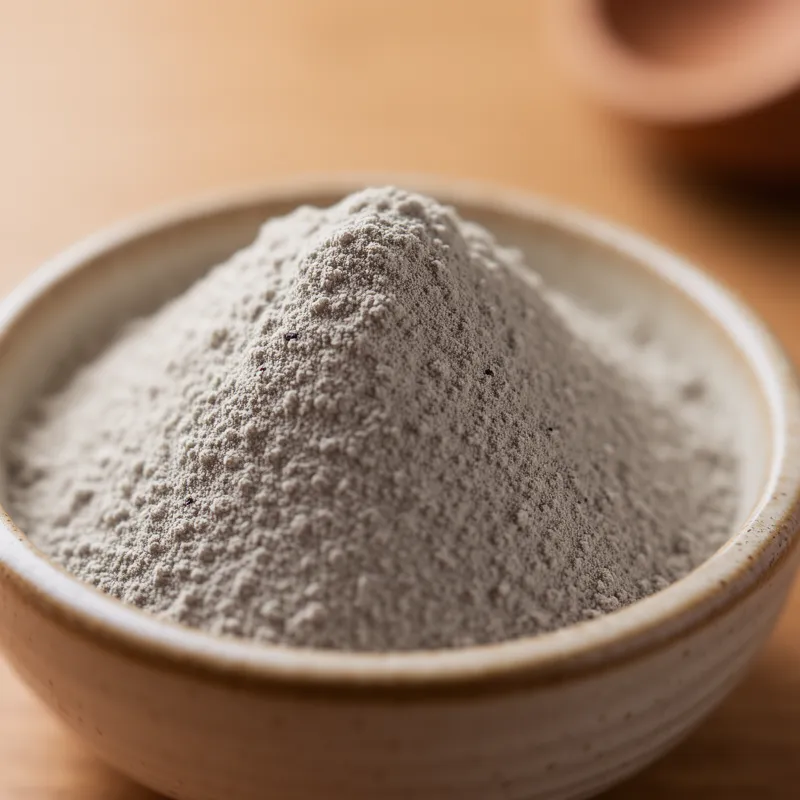
Despite its common name, buckwheat contains absolutely no wheat and is entirely gluten-free. It is not a grass but a dicotyledonous plant belonging to the Polygonaceae family, making it a botanical cousin to rhubarb and sorrel. The flour is milled from the seeds of the Fagopyrum esculentum plant, a pseudo-cereal. One of its most remarkable chemical properties is its high concentration of rutin, a bioflavonoid that has been shown to strengthen blood capillaries and improve circulation. This compound is largely absent in true cereal grains. Historically, buckwheat flour has been a staple in both Eastern European and East Asian cuisines. In Japan, it forms the base of soba noodles, though its lack of gluten proteins means pure buckwheat dough is notoriously fragile and often requires a wheat flour binder to hold together. Nutritionally, buckwheat flour boasts a superior amino acid profile compared to many true grains, particularly in lysine, which is typically the limiting amino acid in wheat and corn. This makes it a surprisingly complete protein source for a plant-based staple.
Because buckwheat flour lacks gluten, baked goods will be dense and crumbly unless blended with wheat flour or a binding agent like xanthan gum. For pancakes and crepes, it can be used on its own to yield a robust, earthy flavor. Store it in an airtight container in a cool, dark place or the refrigerator to prevent its natural oils from going rancid. To maximize protein absorption, pair it with dairy or eggs, which provide complementary amino acids and help bind the batter.
Per 100g — daily values based on a 2,000 calorie diet
CalRay's AI recognizes flour and hundreds of thousands of other foods from a photo. No manual lookup needed.
Flour, buckwheat contains 358 calories per 100g. A standard serving of 1 RACC (30g) provides 107 calories. It is relatively calorie-dense, so portion control is important.
Flour, buckwheat provides 8.88g of protein per 100g, which is 18% of the 50g daily recommended value. It is not a primary protein source.
Flour, buckwheat contains 75g of carbohydrates per 100g . It also provides 10.4g of dietary fiber.
Flour, buckwheat has 358 kcal per 100g, so portions need to be monitored on a weight-loss diet. Use CalRay to track your intake accurately. Its fiber content (10.4g/100g) also promotes fullness.
The easiest way to track flour is with CalRay. Simply snap a photo of your meal and the AI will automatically identify the food and calculate calories and macros based on the estimated portion size — no manual lookup required. You can also search by name and adjust gram weight manually.
148 kcal  78 kcal
  44 kcal