 150 kcal
 P 12.3g C 0.91g F 10.3g
A flour the Aztecs worshipped and the Spanish tried to erase—now prized for packing all nine essential amino acids.
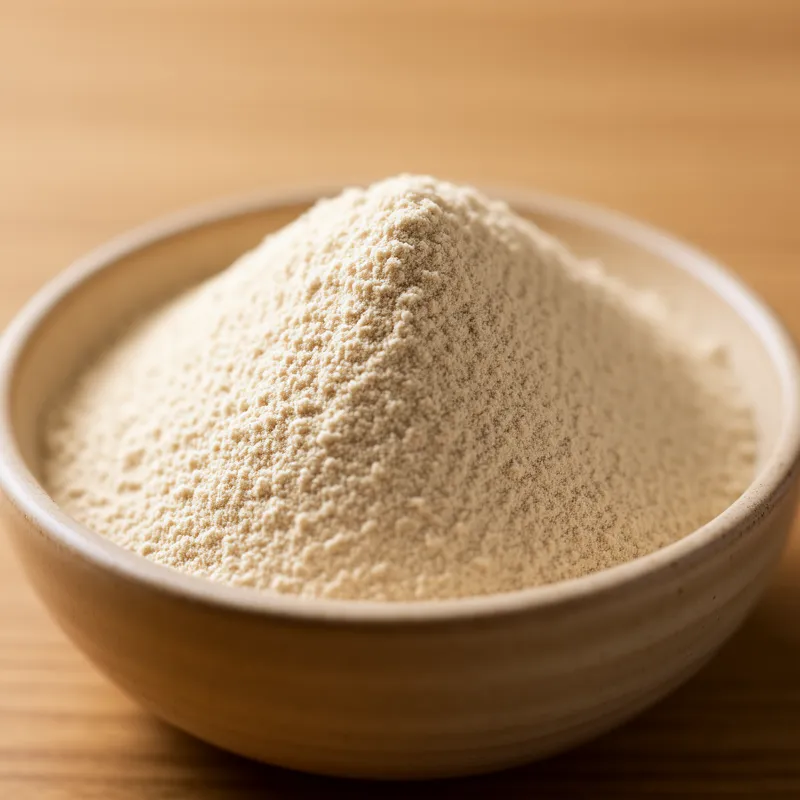
Amaranth was so sacred to the Aztecs that they shaped its seeds into ritual figures of gods and consumed them during ceremonies—a practice so central to their religion that Spanish conquistadors banned the crop upon conquering Tenochtitlan in 1521, burning amaranth fields to enforce conversion to Christianity. The plant survived in small plots and wild patches, largely forgotten outside of Mexico and the Andes until the 1970s, when researchers rediscovered its nutritional profile. Unlike true cereal grains such as wheat, rice, and corn, amaranth is a pseudocereal—a member of the Amaranthaceae family, botanically unrelated to grasses. Its protein is unusually complete for a plant source because it contains lysine, an essential amino acid that most true grains lack in meaningful quantities. When the seeds are milled into flour, this lysine-rich protein carries through, making amaranth flour a rare plant-based ingredient that supplies all nine essential amino acids in nutritionally significant amounts. The flour also retains squalene, a lipid compound more commonly associated with shark liver oil and olive oil, which contributes to amaranth's relatively high fat content compared to wheat flour.
Amaranth flour has no gluten, so it cannot replace wheat flour one-to-one in yeast breads—blend it at 10–25% with other gluten-free flours and add a binder like eggs or xanthan gum for structure. It excels in pancakes, flatbreads, and quick breads, where its nutty, slightly earthy flavor complements warm spices like cinnamon and cumin. Store in an airtight container in the refrigerator or freezer, as its higher fat content makes it more prone to rancidity than wheat flour. Pair with vitamin C–rich foods to enhance absorption of its iron.
Per 100g — daily values based on a 2,000 calorie diet
CalRay's AI recognizes flour and hundreds of thousands of other foods from a photo. No manual lookup needed.
Flour, amaranth contains 384 calories per 100g. A standard serving of 1 RACC (30g) provides 115 calories. It is relatively calorie-dense, so portion control is important.
Flour, amaranth provides 13.2g of protein per 100g, which is 26% of the 50g daily recommended value. It is a good source of protein.
Flour, amaranth contains 68.8g of carbohydrates per 100g . It also provides 7.21g of dietary fiber.
Flour, amaranth has 384 kcal per 100g, so portions need to be monitored on a weight-loss diet. Use CalRay to track your intake accurately. Its fiber content (7.21g/100g) also promotes fullness.
The easiest way to track flour is with CalRay. Simply snap a photo of your meal and the AI will automatically identify the food and calculate calories and macros based on the estimated portion size — no manual lookup required. You can also search by name and adjust gram weight manually.
150 kcal 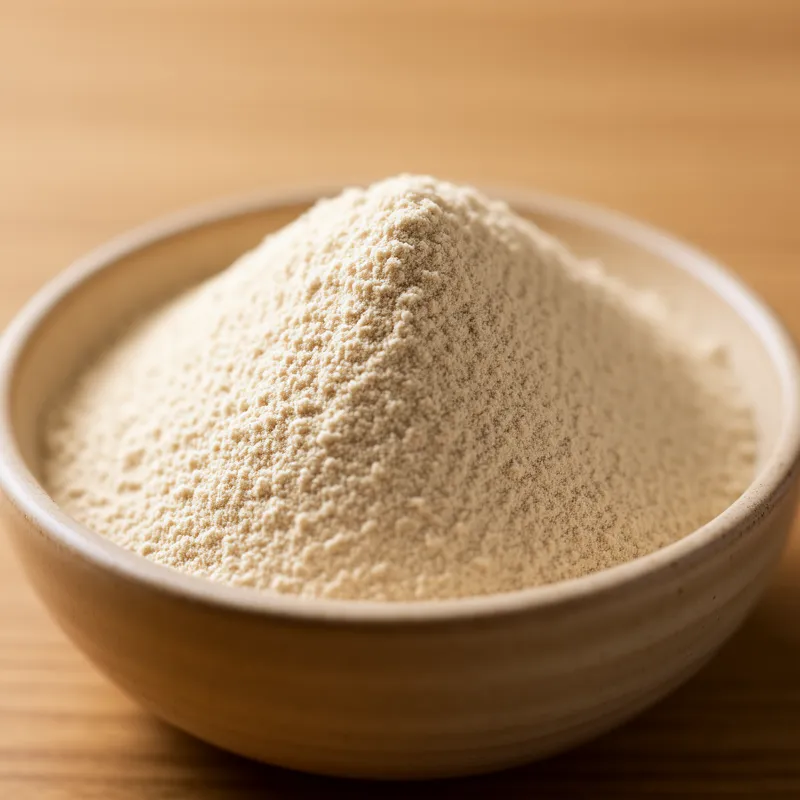 385 kcal
  35 kcal