 27 kcal
 P 0.83g C 5.51g F 0.63g
Red rice gets its striking color from the same antioxidant pigments found in blueberries, not from iron.
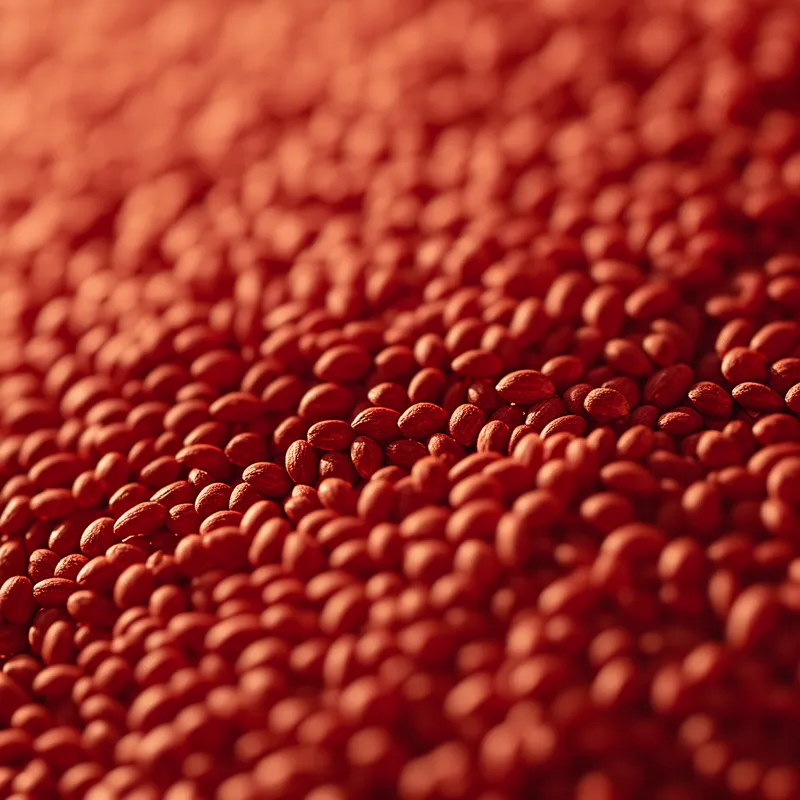
Red rice owes its deep crimson bran layer to anthocyanins, a class of water-soluble pigments more commonly associated with berries and red cabbage. Unlike white rice, which has had its bran and germ milled away, red rice retains these outer layers, preserving its natural fiber, protein, and fat content. The specific anthocyanins present—primarily cyanidin-3-glucoside and peonidin-3-glucoside—act as antioxidants in the plant to protect it from environmental stressors like UV radiation and pathogens. When consumed, these compounds behave similarly, scavenging free radicals in the human body. Historically, red rice varieties like Bhutanese red rice and French Camargue red rice have been cultivated for centuries in their respective regions, thriving in specific climates where the soil and water conditions allow the pigments to develop fully. Because this entry specifies unenriched dry rice, the vitamins and minerals present are entirely naturally occurring within the grain's intact bran and endosperm, without synthetic fortification. The higher fat content (3.44g per 100g) compared to white rice also comes from the retained germ, which is rich in natural oils.
Rinse red rice thoroughly under cold water before cooking to remove surface starch and prevent clumping. Because the bran layer is intact, it requires a longer cooking time than white rice—typically 40 to 45 minutes with a 1:2 ratio of rice to water. Soaking it for an hour beforehand can reduce cooking time and improve texture. Pair it with vitamin C-rich foods like tomatoes or bell peppers to enhance the absorption of its naturally occurring non-heme iron. Store in an airtight container in a cool, dark place to prevent the natural oils in the germ from going rancid.
Per 100g — daily values based on a 2,000 calorie diet
CalRay's AI recognizes rice and hundreds of thousands of other foods from a photo. No manual lookup needed.
Rice, red, unenriched, dry contains 370 calories per 100g. A standard serving of 1 RACC (45g) provides 167 calories. It is relatively calorie-dense, so portion control is important.
Rice, red, unenriched, dry provides 8.56g of protein per 100g, which is 17% of the 50g daily recommended value. It is not a primary protein source.
Rice, red, unenriched, dry contains 76.2g of carbohydrates per 100g . It also provides 4.2g of dietary fiber.
Rice, red, unenriched, dry has 370 kcal per 100g, so portions need to be monitored on a weight-loss diet. Use CalRay to track your intake accurately. Its fiber content (4.2g/100g) also promotes fullness.
The easiest way to track rice is with CalRay. Simply snap a photo of your meal and the AI will automatically identify the food and calculate calories and macros based on the estimated portion size — no manual lookup required. You can also search by name and adjust gram weight manually.
27 kcal  107 kcal
  27 kcal