 148 kcal
 P 12.4g C 0.96g F 9.96g
Oat flour's uniquely high beta-glucan content makes it a moisture-absorbing powerhouse that naturally thickens batters and gels in the gut.
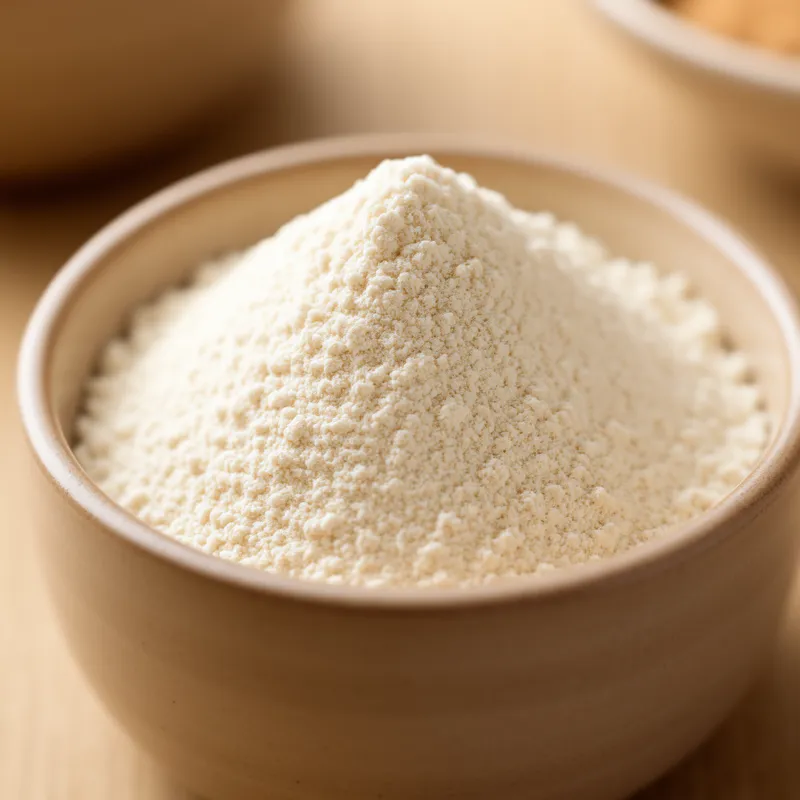
Oat flour's defining characteristic is its high concentration of beta-glucan, a soluble dietary fiber that gives it an exceptional ability to absorb water and form a viscous gel. This gel-forming property is exactly why oat flour bakes differently than wheat flour, yielding denser, chewier textures and retaining moisture longer. From a botanical perspective, oats are unique among common cereal grains because they rely on an avenalin protein storage system rather than the gluten-forming gliadins and glutenins found in wheat. While avenalin provides a robust amino acid profile, it cannot create the elastic network required for traditional leavened bread structures. Historically, oats were primarily consumed as porridge across Northern Europe because they thrive in cold, wet climates where wheat struggles to survive. The commercial milling of oats into a shelf-stable flour only became widespread with the advent of modern processing technologies in the late 19th century. These advancements allowed processors to stabilize the grain's natural lipase enzymes, preventing the flour's healthy fats from turning rancid during storage.
When baking with oat flour, substitute it for wheat flour by weight rather than volume, often adding an extra egg or binder because it lacks gluten structure. Because it absorbs substantial moisture, let batters rest for 10 minutes before baking to prevent a gummy texture. Store whole grain oat flour in an airtight container in the refrigerator or freezer to protect its natural oils from oxidation. For balanced nutrition, pair it with a complete protein like eggs or dairy to compensate for its lower lysine content.
Per 100g — daily values based on a 2,000 calorie diet
CalRay's AI recognizes flour and hundreds of thousands of other foods from a photo. No manual lookup needed.
Flour, oat, whole grain contains 389 calories per 100g. A standard serving of 1 RACC (30g) provides 117 calories. It is relatively calorie-dense, so portion control is important.
Flour, oat, whole grain provides 13.2g of protein per 100g, which is 26% of the 50g daily recommended value. It is a good source of protein.
Flour, oat, whole grain contains 69.9g of carbohydrates per 100g . It also provides 10.5g of dietary fiber.
Flour, oat, whole grain has 389 kcal per 100g, so portions need to be monitored on a weight-loss diet. Use CalRay to track your intake accurately. Its fiber content (10.5g/100g) also promotes fullness.
The easiest way to track flour is with CalRay. Simply snap a photo of your meal and the AI will automatically identify the food and calculate calories and macros based on the estimated portion size — no manual lookup required. You can also search by name and adjust gram weight manually.
148 kcal  61 kcal
  64 kcal