 27 kcal
 P 0.83g C 5.51g F 0.63g
A dehydrated powerhouse where the yolk's fat and carotenoids are concentrated into a highly caloric, shelf-stable powder.
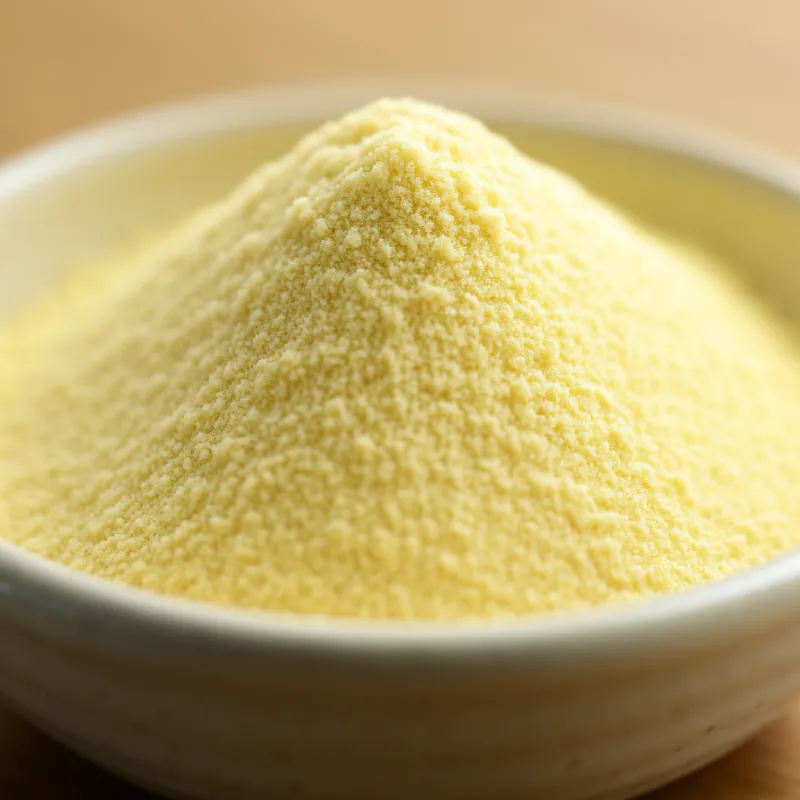
Most people mistake the cloudy, twisted white strands in a raw egg for imperfections or embryos, but they are actually chalazae—protein structures that anchor the yolk in the center of the shell to protect it from shocks. As an egg ages, these chalazae degrade, which is why older eggs have yolks that sit off-center. Another overlooked feature is the vitelline membrane, the transparent sac holding the yolk. It weakens over time, allowing moisture from the white to seep in, causing the yolk to flatten. The color of the yolk, whether pale yellow or deep orange, is entirely dependent on the hen's diet. Hens fed marigold extract, alfalfa, or corn produce yolks rich in carotenoids like lutein and zeaxanthin, which give a vibrant orange hue. Contrary to popular belief, a darker yolk does not inherently mean a more nutritious egg; it simply reflects the presence of specific plant pigments in the bird's feed. When dehydrated into powder, these carotenoids and proteins are concentrated, creating a highly caloric and shelf-stable ingredient.
When using dried whole egg, rehydrate it with warm water at a ratio of roughly one part powder to two parts water to mimic a fresh egg. To maximize nutrient absorption and minimize cholesterol oxidation, avoid cooking reconstituted eggs at extreme high heat; gentle scrambling or poaching is ideal. Pairing them with vitamin C-rich foods like tomatoes or bell peppers helps prevent lipid oxidation during cooking. Store the powder in a cool, dark, airtight container to prevent the fats from going rancid.
Per 100g — daily values based on a 2,000 calorie diet
CalRay's AI recognizes egg and hundreds of thousands of other foods from a photo. No manual lookup needed.
Egg, whole contains 575 calories per 100g. A standard serving of 1 cup (85g) provides 489 calories. It is relatively calorie-dense, so portion control is important.
Egg, whole provides 48.1g of protein per 100g, which is 96% of the 50g daily recommended value. It is an excellent source of protein.
Egg, whole contains 1.87g of carbohydrates per 100g .
Egg, whole has 575 kcal per 100g, so portions need to be monitored on a weight-loss diet. Use CalRay to track your intake accurately. Its high protein content (48.1g/100g) helps with satiety.
The easiest way to track egg is with CalRay. Simply snap a photo of your meal and the AI will automatically identify the food and calculate calories and macros based on the estimated portion size — no manual lookup required. You can also search by name and adjust gram weight manually.
27 kcal  28 kcal
  408 kcal