 143 kcal
 P 6.62g C 28.2g F 0.38g
Napa cabbage is botanically a turnip, not a true cabbage, sharing its species with the root vegetable rather than the round-headed brassicas.
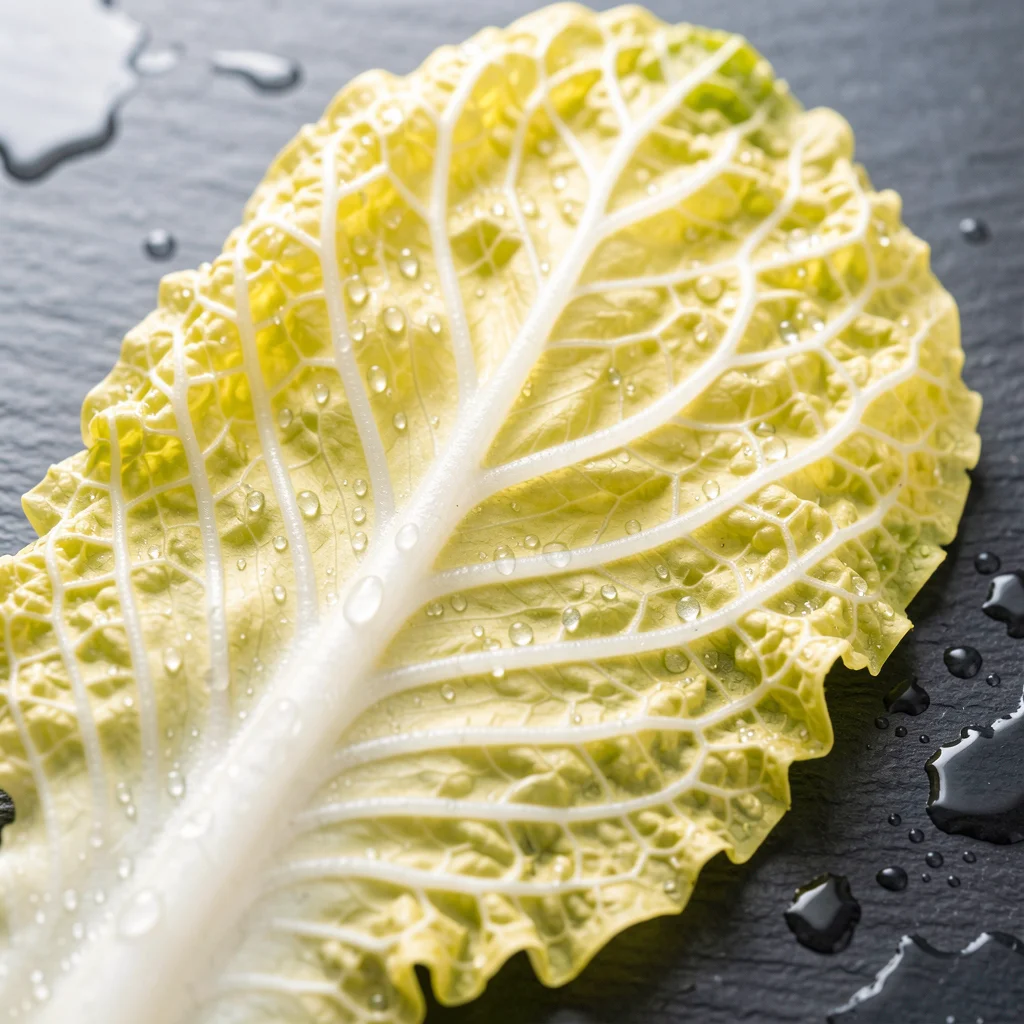
Napa cabbage (Brassica rapa subsp. pekinensis) belongs to the same species as turnips and bok choy, not the same species as green or red cabbage (Brassica oleracea). This genetic distinction explains its tender, wrinkled leaves and mild, slightly sweet flavor compared to the tough, peppery leaves of its round cousins. Cultivated in China for over 1,500 years, it became a cornerstone of East Asian diets, particularly as the primary ingredient in kimchi. The fermentation process relies on the cabbage's high water content and naturally occurring lactic acid bacteria, which convert its sugars into lactic acid, preserving the vegetable and creating a tangy, probiotic-rich food. The destemmed leaves are particularly valued for their delicate texture, which allows them to absorb flavors rapidly while maintaining a slight crunch even after prolonged fermentation or quick cooking. Unlike true cabbages, napa leaves lack the dense cellular structure that requires prolonged cooking, making them uniquely suited for raw salads and quick braises.
Destemmed napa leaves cook down rapidly, making them ideal for quick stir-fries or as delicate wrappers for steamed dumplings. To maximize nutrient retention, eat the raw leaves in salads or slaws, pairing them with a fat-based dressing to help absorb their fat-soluble vitamin K. If using for kimchi, salt the leaves thoroughly to draw out excess water, which prevents the final ferment from becoming mushy. Store whole heads wrapped tightly in the refrigerator to prevent moisture loss.
Per 100g — daily values based on a 2,000 calorie diet
CalRay's AI recognizes cabbage and hundreds of thousands of other foods from a photo. No manual lookup needed.
Cabbage, napa, leaf, destemmed contains 4 calories per 100g. A standard serving of 1 RACC (85g) provides 3 calories. It is considered a very low-calorie food (under 50 kcal/100g), making it excellent for weight management.
Cabbage, napa, leaf, destemmed provides 1.06g of protein per 100g, which is 2% of the 50g daily recommended value. It is not a primary protein source.
Cabbage, napa, leaf, destemmed contains 0g of carbohydrates per 100g . It also provides 1.2g of dietary fiber.
Yes! Cabbage, napa, leaf, destemmed is very low in calories (4 kcal/100g) and can be eaten in generous portions even on a calorie-restricted diet.
The easiest way to track cabbage is with CalRay. Simply snap a photo of your meal and the AI will automatically identify the food and calculate calories and macros based on the estimated portion size — no manual lookup required. You can also search by name and adjust gram weight manually.
143 kcal  44 kcal
  48 kcal