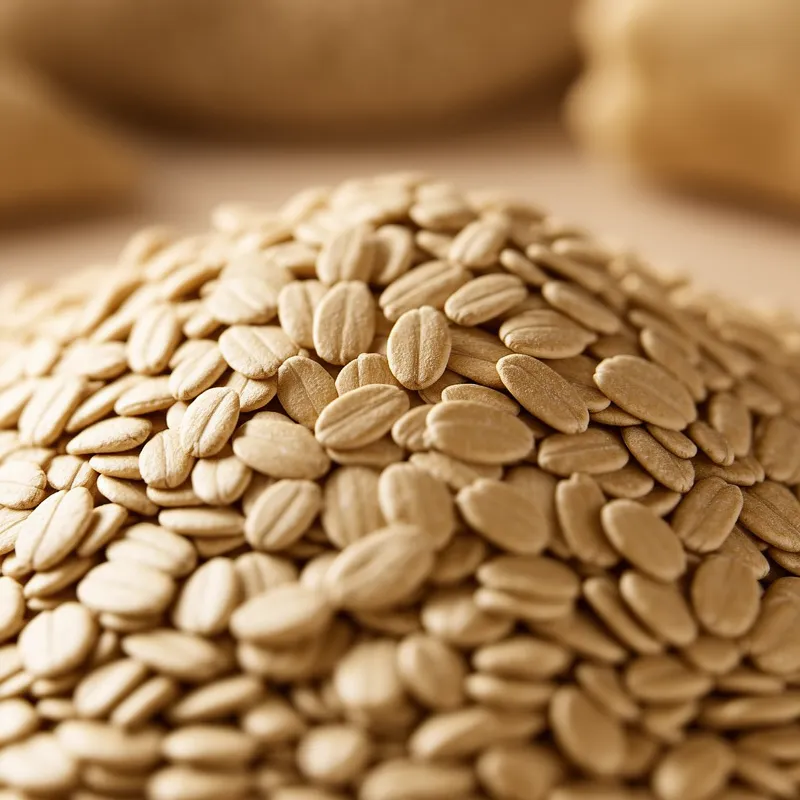
 382 kcal
 P 13.5g C 68.7g F 5.89g
Skim milk looks slightly bluish because its tiny protein particles scatter shorter blue wavelengths of light.
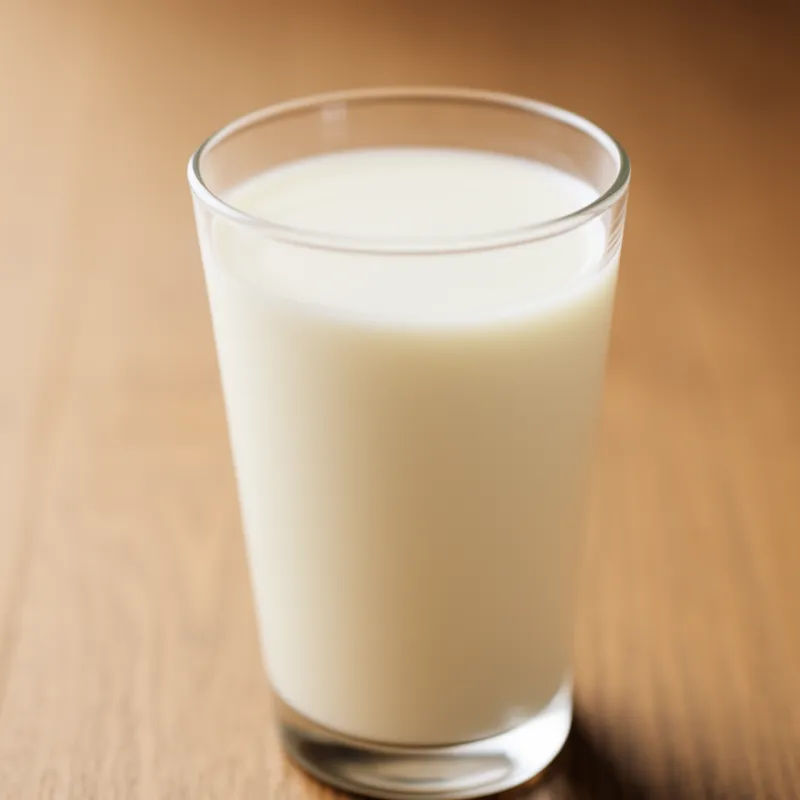
Gustaf de Laval patented the first continuous centrifugal cream separator in 1878, revolutionizing dairy farming by making skimming highly efficient. Before this, milk was left in shallow pans for the lighter fat to naturally rise. Once the fat is mechanically spun out, the remaining liquid takes on a characteristic bluish tint. This color shift happens because the large fat globules, which normally scatter all wavelengths of light to give whole milk its creamy white appearance, are gone. Instead, the smaller casein protein micelles scatter shorter blue wavelengths more effectively. To compensate for the loss of fat-soluble vitamins stripped away with the cream, commercial nonfat milk is typically fortified with vitamins A and D. The resulting product retains the water-soluble proteins and lactose, making it a high-protein, low-calorie beverage.
Nonfat milk's low fat content makes it excellent for lean protein smoothies or baking where you want moisture without added fat. Because it lacks fat to carry flavor, it pairs well with robust ingredients like cocoa powder or strong coffee. Store it in the coldest part of the refrigerator, not the door, to maximize shelf life. If you are using it to make a roux or cheese sauce, you may need to add a small amount of butter or oil to compensate for the missing milk fat.
Per 100g — daily values based on a 2,000 calorie diet
CalRay's AI recognizes milk and hundreds of thousands of other foods from a photo. No manual lookup needed.
Milk, nonfat, fluid contains 34 calories per 100g. A standard serving of 1 cup (246g) provides 84 calories. It is considered a very low-calorie food (under 50 kcal/100g), making it excellent for weight management.
Milk, nonfat, fluid provides 3.43g of protein per 100g, which is 7% of the 50g daily recommended value. It is not a primary protein source.
Milk, nonfat, fluid contains 4.92g of carbohydrates per 100g .
Yes! Milk, nonfat, fluid is very low in calories (34 kcal/100g) and can be eaten in generous portions even on a calorie-restricted diet.
The easiest way to track milk is with CalRay. Simply snap a photo of your meal and the AI will automatically identify the food and calculate calories and macros based on the estimated portion size — no manual lookup required. You can also search by name and adjust gram weight manually.
382 kcal  97 kcal
  36 kcal