 143 kcal
 P 6.62g C 28.2g F 0.38g
Bok choy is technically two vegetables in one, with stems and leaves that cook at completely different rates.
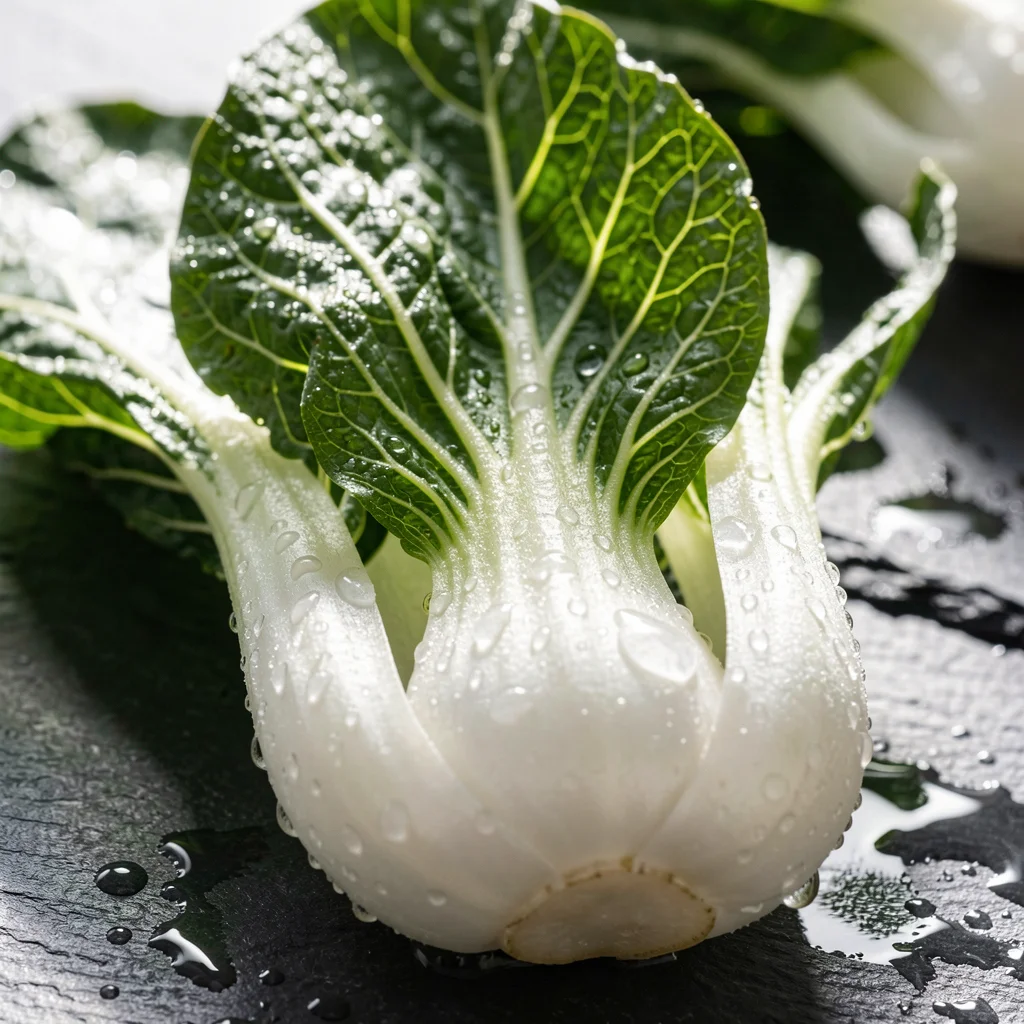
Bok choy belongs to the chinensis group of Brassica rapa, distinct from the pekinensis group that includes Napa cabbage. It has been cultivated in China for millennia, prized for its ability to mature quickly. The crispness of its stems comes from parenchyma cells that store large amounts of water. When cooking, the leaves wilt rapidly while the thick petioles retain their crunch due to these cellular structures. Additionally, bok choy contains glucosinolates, which are sulfur-containing compounds. When the plant's cells are damaged by chewing or chopping, an enzyme called myrosinase converts these glucosinolates into isothiocyanates. These bioactive compounds are responsible for the slightly peppery, mustard-like flavor and have been extensively studied for their potential cellular protective effects. Unlike some cruciferous vegetables that become bitter when overcooked, bok choy's mild flavor profile is maintained best through quick cooking methods like stir-frying or blanching, which also preserve the heat-sensitive myrosinase enzyme and its beneficial chemical reactions. The plant was introduced to European markets in the 19th century but remained a specialty crop, whereas in East Asia it became a dietary staple.
To get the best texture, separate the leaves from the stems before cooking. Add the chopped stems to a hot stir-fry first, giving them a minute or two head start, then toss in the leaves at the very end so they wilt slightly without turning mushy. Pair bok choy with aromatics like garlic and ginger, and a splash of soy sauce or sesame oil. Store it unwashed in a perforated plastic bag in the crisper drawer to maintain its high water content.
Per 100g — daily values based on a 2,000 calorie diet
CalRay's AI recognizes cabbage and hundreds of thousands of other foods from a photo. No manual lookup needed.
Cabbage, bok choy contains 20 calories per 100g. A standard serving of 1 RACC (85g) provides 17 calories. It is considered a very low-calorie food (under 50 kcal/100g), making it excellent for weight management.
Cabbage, bok choy provides 1.02g of protein per 100g, which is 2% of the 50g daily recommended value. It is not a primary protein source.
Cabbage, bok choy contains 3.51g of carbohydrates per 100g . It also provides 1.26g of dietary fiber.
Yes! Cabbage, bok choy is very low in calories (20 kcal/100g) and can be eaten in generous portions even on a calorie-restricted diet.
The easiest way to track cabbage is with CalRay. Simply snap a photo of your meal and the AI will automatically identify the food and calculate calories and macros based on the estimated portion size — no manual lookup required. You can also search by name and adjust gram weight manually.
143 kcal  44 kcal
  107 kcal